


The producer page covers the job from development to delivery. This page is about a narrower window: the months when a producer has a script, maybe a director, and meetings with money, but no line producer yet. Everyone in those meetings asks the same two questions, how many days and how much, and a producer who can answer with the reasoning attached gets taken more seriously than one who quotes a round number.
A first day count from the script
The quickest defensible day count starts from pages. A 96-page thriller at 4 pages a day is 24 days. At 3 1/2 pages a day, which suits a show with stunts, night work, or a lot of locations, it's about 27 days (96 / 3.5 is 27.4). Putting both numbers in front of a financier, with a sentence on why the script leans one way, is more credible than a single figure. The shoot days estimator runs the same arithmetic.
What moves the pace is visible in the breakdown: count the night exteriors, the scenes with children, the number of distinct locations, and anything with stunts, rain, or picture cars. A producer who reads the script breakdown with that list in mind can defend 27 days over 24 without a scheduler in the room.
Finding the expensive pages
When the budget comes in high, the producer's job is to decide what the film can lose. Cost per page is a blunt but useful way to find candidates. For a fictional thriller, a line producer's rough estimates for three scenes:
| Scene | Set | Pages | What it pulls in | Rough cost | Per page |
|---|---|---|---|---|---|
| 12 | EXT. HIGHWAY - NIGHT (rain) | 1 2/8 | Rain towers, water truck, road closure, police | $28,000 | $22,400 |
| 57 | INT. STADIUM CONCOURSE - DAY | 2 | 150 background, stadium fee | $31,000 | $15,500 |
| 88 | EXT. LAKE - DAWN | 4/8 | Separate location, company move, early call | $9,000 | $18,000 |
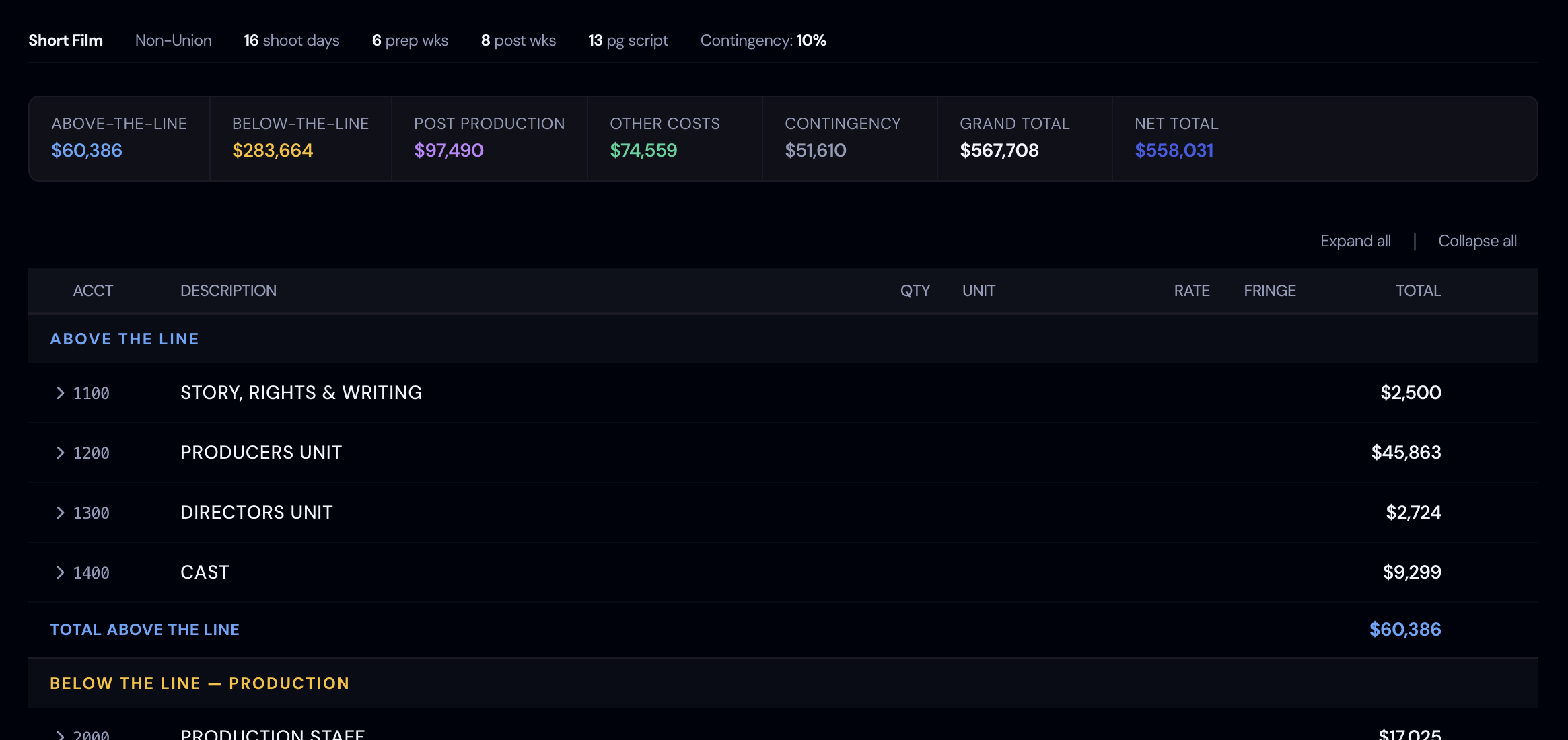
Scene 57 costs the most in total, but scene 12 costs the most per page. If the writer can move the highway argument into a parked car in a garage the production is already using, the scene keeps its story function and loses most of its cost. Those conversations go better when the writer and director can see the breakdown next to the number that needs to come out. The top sheet shows where the money sits by account, and the breakdown shows which scenes put it there.
Showing the incentive math
Financiers discount incentive numbers that arrive without math. A worked version for a $2,400,000 budget in a state with a 20% transferable credit:
- Estimate qualified in-state spend: $1,560,000 (65% of the budget, after excluding out-of-state cast and post).
- Credit value: $1,560,000 x 0.20 = $312,000.
- Sale of the credit at 90 cents on the dollar: $312,000 x 0.90 = $280,800.
- Net budget: $2,400,000 minus $280,800 = $2,119,200.
Every one of those assumptions should be written down, including the sale price, because a transferable tax credit is worth what a buyer pays for it and arrives after the audit, often long after wrap. That timing is why many producers borrow against the credit. Transferable vs refundable tax credits and how to finance an indie film explain both.
One version of the project
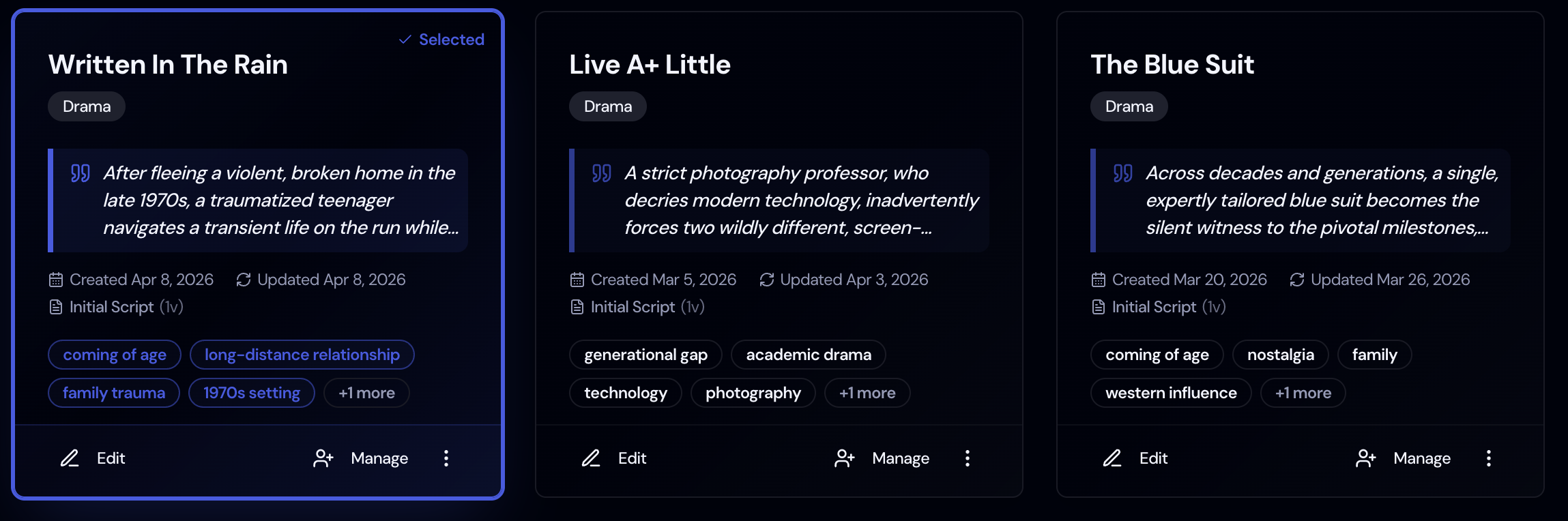
Packaging creates copies. The writer has a draft, the director has a marked-up version, the deck has a logline from two drafts ago, and the budget was built on something in between. Before a financing meeting, a producer should be able to name the script version, date, and page count that every number in the deck came from. Once the film heads into prep, a locked script and revision colors take over that job.
In Storiara
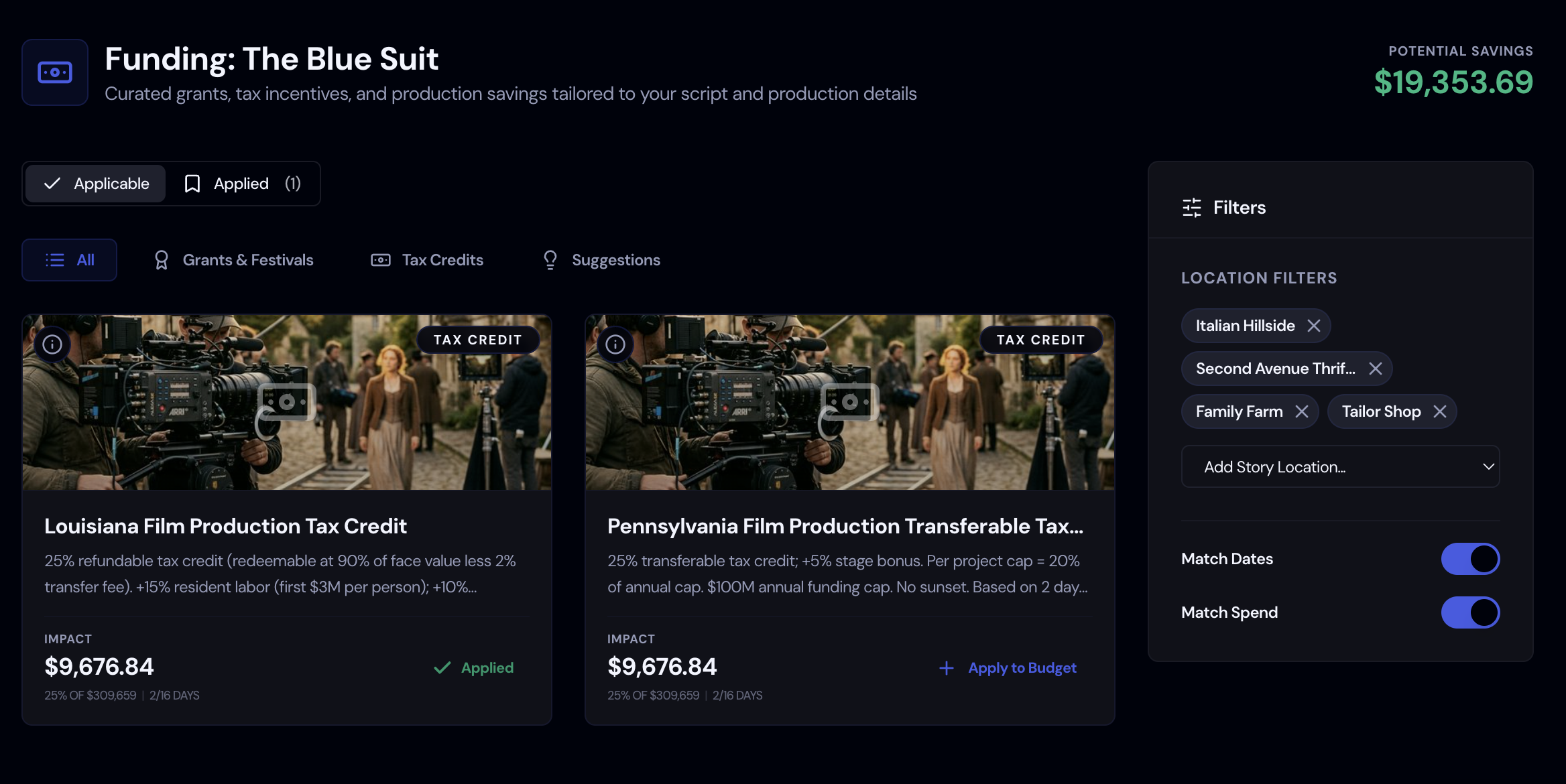
Storiara builds a story from an uploaded PDF, Word, or Final Draft script, with scenes, page counts in eighths, and the locations, characters, and props the script calls for. New drafts go on the same story as script versions. The budget is calculated from rate tables and the rates you enter, and it exports to Excel. Funding's estimates are simpler than the worked example above: it assumes qualifying spend is 60% of the budget's gross total and doesn't apply caps or uplifts, so on this $2,400,000 budget with every shoot day in the state it would show $288,000 ($1,440,000 x 0.20) before any credit sale discount. Treat it as a starting point for the conversation with the film office, and see the film financing reading path for the rest.