

Commercials run on a compressed clock. An agency sends boards to two or three production companies, each company's director writes a treatment, the producer builds a bid, and the job gets awarded maybe a few weeks before the shoot. Prep then happens while the creative is still being approved. The documents that matter most are the bid, the shot list, and a schedule that honestly counts setups.
Reading the boards like a bid
Before you price anything, break the boards down the way a 1st AD would break down a script. For each frame, note:
- Location or stage, and whether it's the same set as the frame before.
- Talent on camera, including principals, extras, hand models, and kids.
- Product requirements: hero product, multiples, a food stylist, a tabletop unit.
- Camera support: dolly, crane, car rig, drone, high-speed camera.
- Anything that needs a specialist, like water, animals, stunts, or pyrotechnics.
A 30-second spot with 14 frames might break down to four sets, nine setups, and a tabletop day. That breakdown is what goes into the bid, and it's what you point to when the agency adds a tenth setup after award. The storyboard and shot list templates both work as the base.
Building the AICP bid
Most US production companies bid on the AICP form. Its summary groups costs into lettered sections:
| Section | What goes there |
|---|---|
| A | Prep crew (line producer, AD, DP, department heads during prep and wrap) |
| B | Shoot crew |
| C | Prep and wrap expenses |
| D | Location expenses |
| E | Props, wardrobe, and animals |
| F | Studio costs |
| G, H | Art department labor and expenses |
| I | Equipment rental |
| J | Media |
| K | Miscellaneous production costs |
| L | Director's fees |
| M, N | Talent and talent expenses |
| O | Other |
The form subtotals A through K, and insurance and the production fee are added before the production total, so check which subtotal your production fee percentage is applied to before the agency asks. Crew lines on the form have columns for straight time and overtime at 1.5x and 2x, so a twelve-hour day costs noticeably more than a ten.
A quick worked example for one crew line: a gaffer at a $900 day rate on a ten-hour day costs $90 an hour. If the day goes to twelve hours and your deal pays time and a half after ten, the extra two hours cost 2 x $90 x 1.5 = $270, so the day becomes $1,170. Multiply that across a 25-person crew and a late product shot gets expensive. Check the rate and overtime terms of your actual crew deals; the overtime calculator and crew rate lookup help. How to budget a commercial shoot and the commercial production budget template go line by line.
Talent and usage
Commercial talent under the SAG-AFTRA Commercials Contract is paid for the session and then for use of the spot, which varies by media, markets, and length of the cycle. On a national broadcast campaign, usage can dwarf the session fee. Get the agency's media plan in writing before bidding talent, and confirm who pays usage (often the agency or advertiser handles it through a talent payroll company, but the bid needs to say so). Kids on set add a studio teacher and work-hour limits.
Scheduling by setups
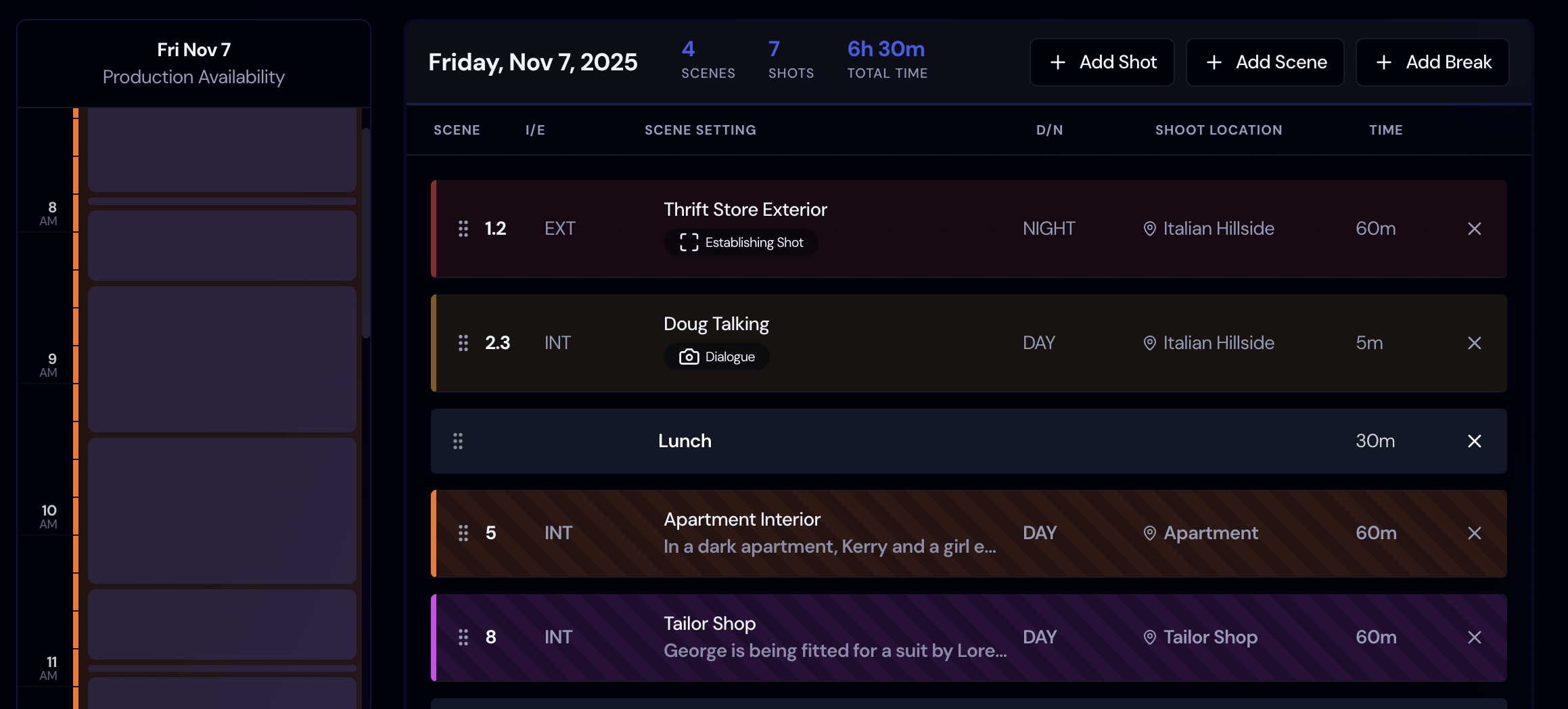
A commercial schedule lists shots, each with an estimated duration, instead of eighths of a page. Order them to minimize relighting: shoot wide and establish the look, move in for coverage, then turn around. Tabletop product work often goes on its own unit or at the end of the day after talent wraps, which is fine as long as the hero product shot isn't squeezed into overtime. Put the client's must-have shots early in case the day runs long.
Plan weather cover for exterior days, and read the bid's weather-day terms so everyone knows who pays if you have to push.
Paperwork on commercial jobs
- Location agreements with the exact shoot dates and hours, plus a certificate of insurance naming the property owner.
- Talent releases and union contracts for principals and extras.
- Product and trademark clearances for anything in frame that isn't the client's brand.
- A detailed call sheet that shows which spot and shot is up when, so the agency team can plan their day in video village.
Mistakes that cost commercial producers money
- Bidding off draft boards without writing down the assumptions (number of setups, locations, talent count) that the number depends on.
- Leaving the pre-light day off the bid for a stage job.
- Not confirming product multiples. One scratched hero bottle can stop the day.
- Forgetting agency and client catering and seating when counting lunches.
Where Storiara helps on a spot
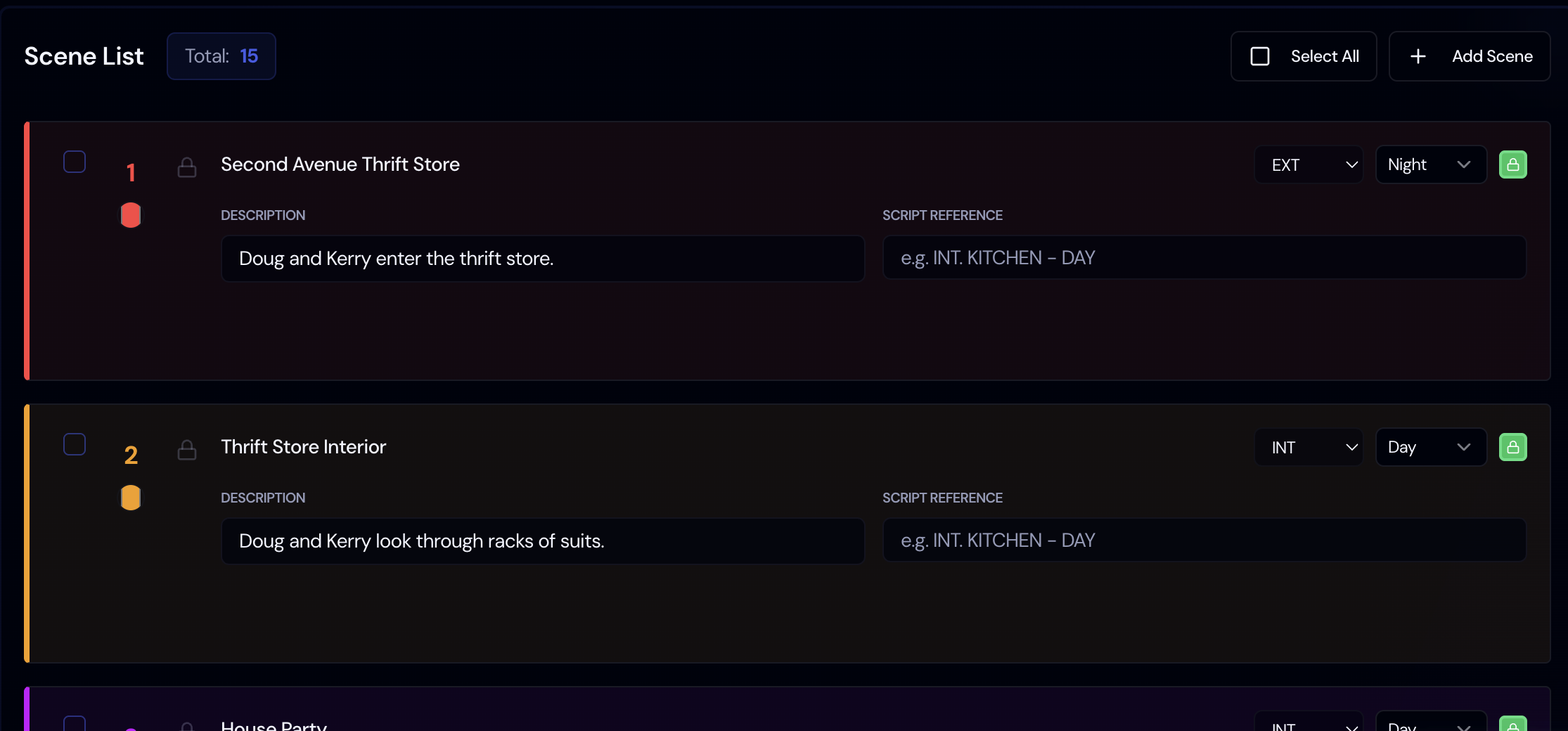
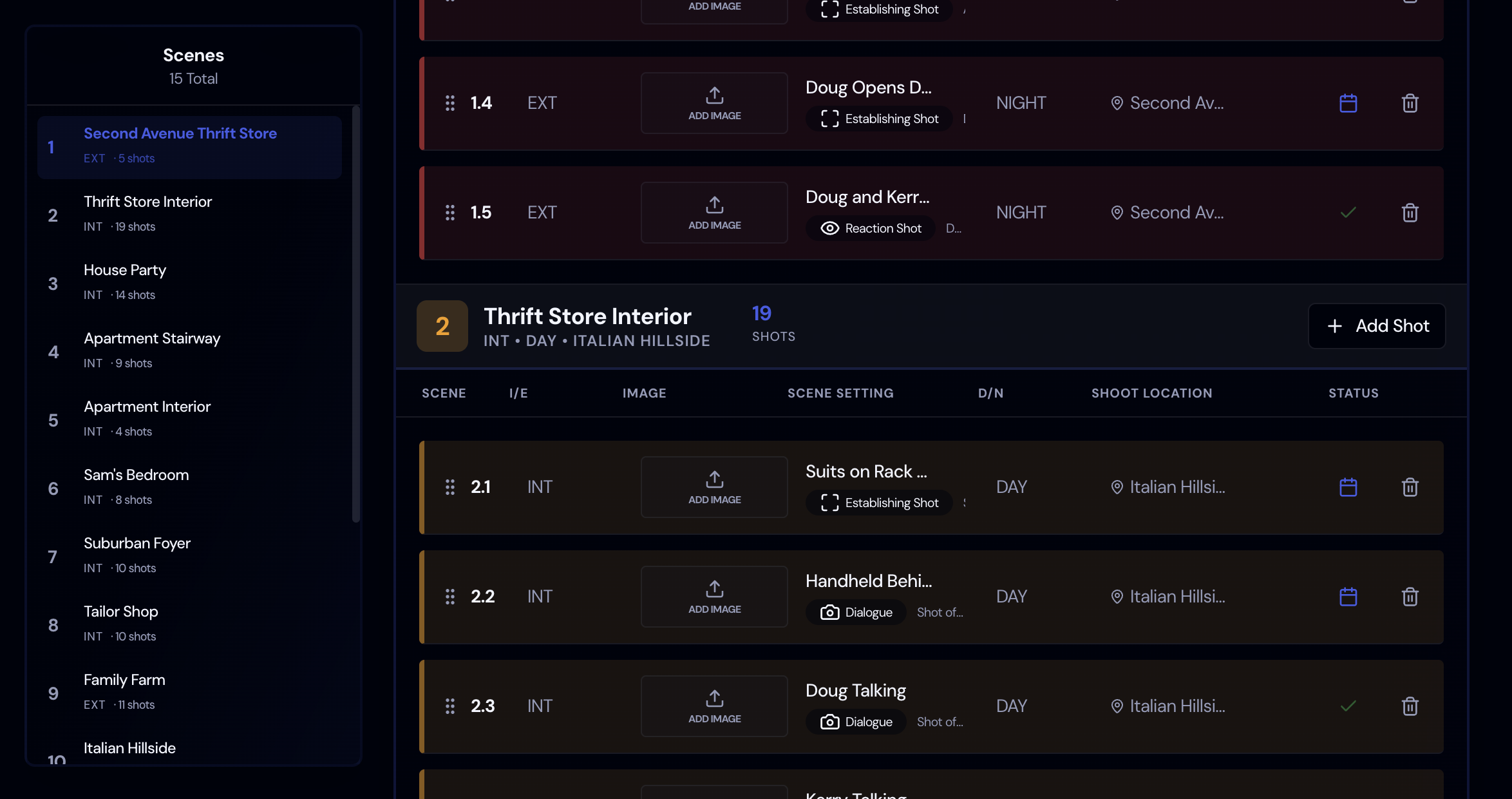
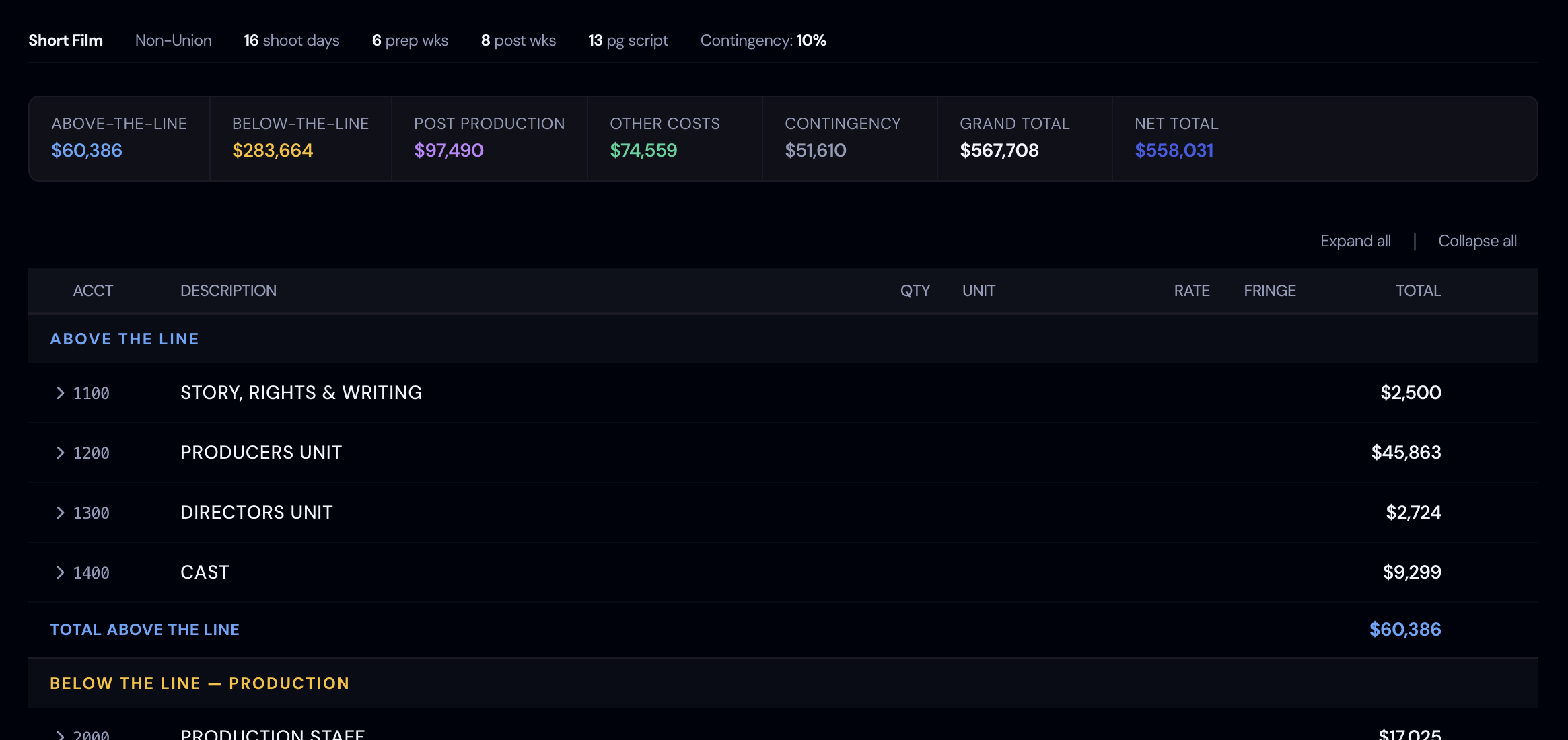
Storiara doesn't generate an AICP bid. It's useful for the planning around it: a shot list with board frames attached, a stripboard that schedules shots in minutes and won't let a day run past your hours, a film-style budget you can export to Excel, and a call sheet the agency and client can open from a link.