
A documentary's paperwork looks different from a narrative's because the story isn't finished when you start shooting. The outline says what the film is about and who might carry it. The schedule is a set of bets on where the story will be. Your job in prep is to make those bets cheap to change.
Plan and shoot in blocks
Narrative films lock a script and then a schedule. Documentaries plan a block of shooting, shoot it, watch the footage, and plan the next block. A typical early block might be:
- Two interview days with the main subject, at home and at work.
- One verite day following the subject to an event you know is happening.
- A half day of b-roll at the locations the interviews will mention.
- One interview each with two secondary voices.
Build a documentary shooting schedule around the people. Subjects aren't paid actors and they have jobs, families, and second thoughts, so confirm dates in writing and have a backup day. Interviews usually eat more time than their runtime suggests. A sit-down that yields 90 minutes of talk can take most of a half day once you count the light setup, the pre-interview chat, a lav mic that picks up a necklace, and resetting for a second angle.
Group b-roll by location the same way a narrative groups scenes. If three interviews mention the old factory, get all the exterior coverage of the factory in one visit, at the time of day that matches the story. A documentary script breakdown applied to your outline, with each outline beat tagged by location and person, gives you those groupings.
Shooting ratio drives the post budget
Documentaries shoot a lot. Suppose you're making a 90-minute feature documentary and plan 45 shoot days averaging 2.5 hours of usable recorded material per day:
- 45 days x 2.5 hours = 112.5 hours of footage
- 112.5 hours = 6,750 minutes
- 6,750 minutes / 90 minutes = a 75:1 ratio
That ratio tells post what's coming: transcription for 112 hours, drive space for every camera format, and months of an editor and assistant logging. Run your own numbers with the shooting ratio calculator, then carry them into the documentary budget template. Editorial is often the biggest single line in a doc budget.
Archival, music, and the clearance log
Archival footage and photos are where documentaries get surprised. License fees depend on the rights you need (festival, broadcast, streaming, all media), the territory, the term, and sometimes the length of the clip. Editors drop in placeholder footage during the rough cut, the film gets better with it, and nobody checks the cost until the fine cut.
To keep that under control:
- Keep a clearance log from day one: every clip, photo, song, and artwork, its source, the rights you need, the status, and the fee.
- Request quotes as soon as a clip survives two edits. Some archives take weeks to respond.
- Budget archival and music as their own lines, and decide early whether you're licensing festival-only rights now with an upgrade later.
- Talk to a clearance attorney about anything you plan to use under fair use. Errors and omissions insurers will want that opinion, and most distributors won't take a film without E&O.
Signed releases matter as much as licenses. Get an appearance release from every interview subject before the camera rolls, location releases for private property, and a plan for people who appear incidentally in public. The clearance glossary entry covers the terms.
Where the money goes
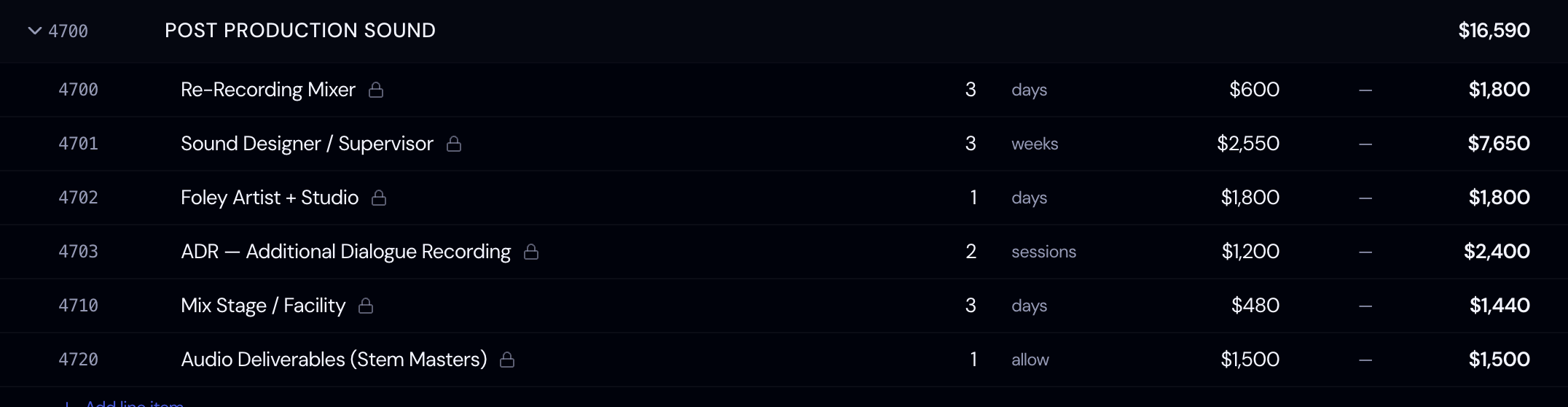
Doc budgets flip the narrative shape. Crews are small (often a director, a DP, and a sound recordist), so production labor is modest, and the money moves to post: editorial, transcription, archival licensing, music, color, sound mix, and deliverables. Travel can be large if subjects are spread out. How to budget a documentary walks through each section. Grants often fund docs in stages, and funders ask for a budget in their own format, so keep yours in a spreadsheet you can reshape. The film grants guide lists common sources.
Mistakes producers make on docs
- Recording an interview before the release is signed. If the subject changes their mind, you have nothing.
- Treating b-roll as something to grab later. The subject moves, the building is demolished, the season changes.
- Poor audio. Viewers forgive rough images far sooner than bad sound. Put a sound recordist on interview days even if you shoot b-roll alone.
- No logging system. Footage without transcripts and notes is footage the editor can't find.
How Storiara handles an outline
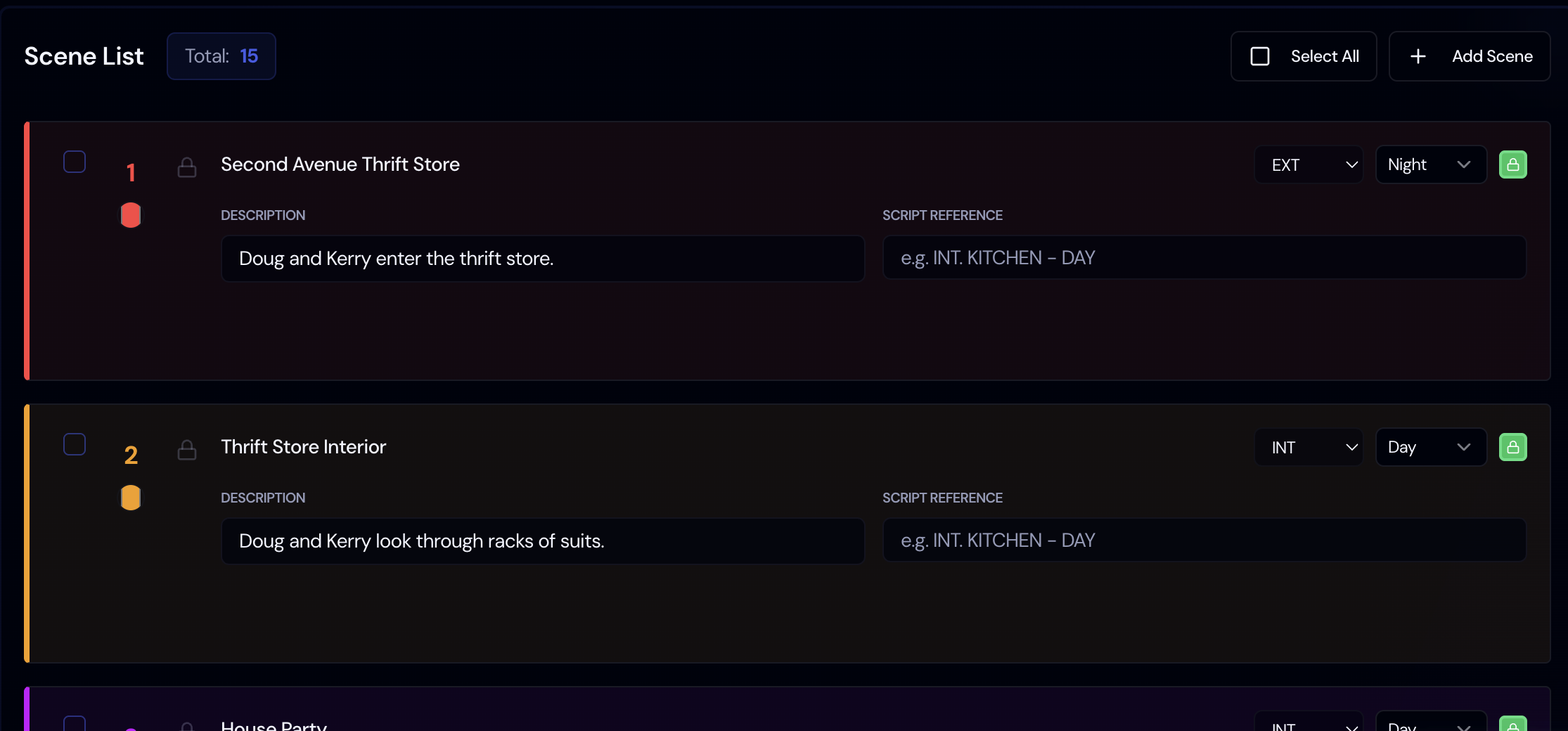
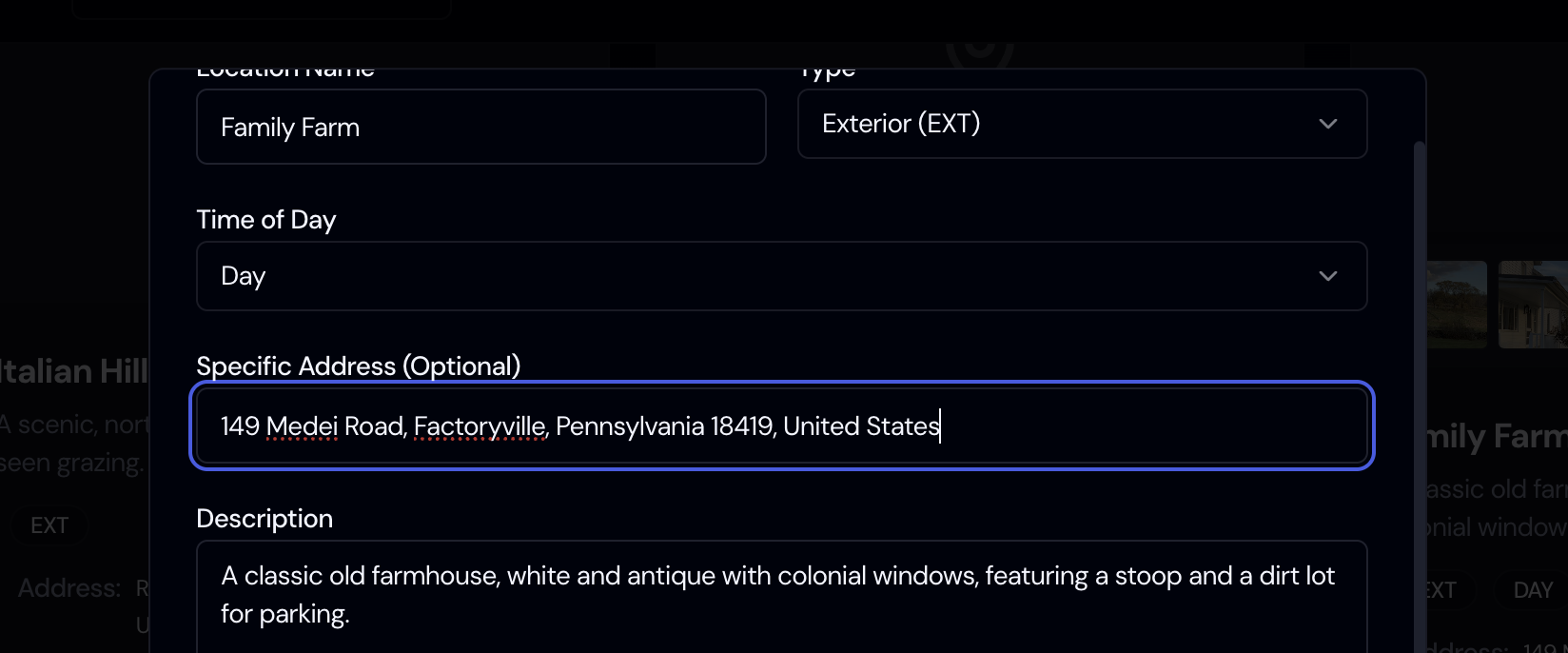
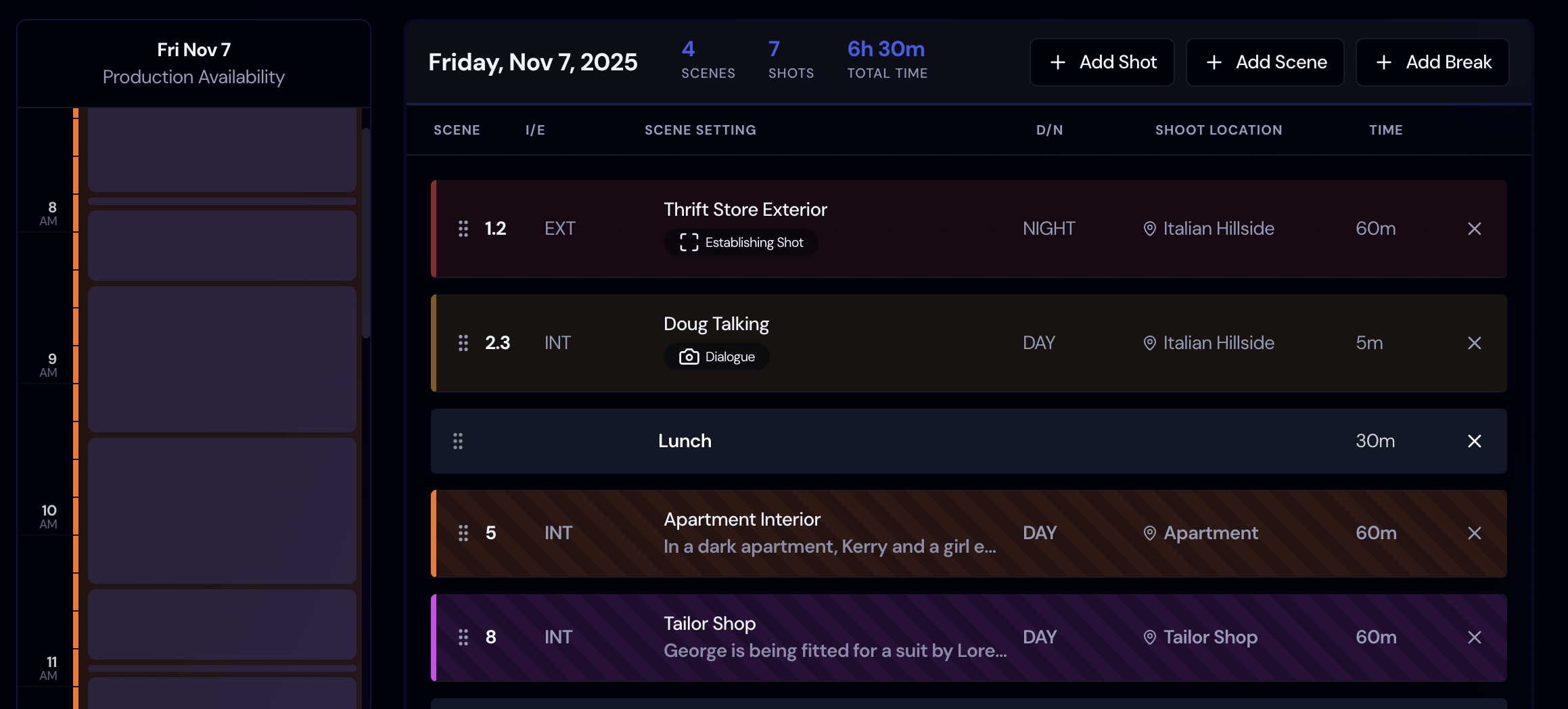
Documentaries start as an Unscripted project in Storiara. You add interviews, verite days, and b-roll blocks as scenes by hand, track subjects in Cast & Crew with the availability form, save locations on the map, and arrange everything on the stripboard. The budget accepts your own archival and music lines and exports to Excel. The automatic script breakdown only applies once you upload a script with scene headings.