
An unscripted show starts with a format: the rules of the competition, the premise of the docuseries, the structure of a typical episode. From there, producers write a story outline for what they expect each episode to contain, knowing the real events will change it. The production plan has to be firm enough to book crews and locations and loose enough to follow a story that goes somewhere else.
Planning around people and events
On a scripted show, the AD boards scenes. On an unscripted show, the calendar is set by participants and events. A typical week for a docuseries might look like this:
| Day | Block | Unit | Notes |
|---|---|---|---|
| Mon | Follow day: family business opening | A and B cameras | Real event, can't be moved |
| Tue | Sit-down interviews, two participants | Interview unit | Controlled lighting, one location |
| Wed | Dark day | Participants back at work | |
| Thu | Planned activity: family dinner | A camera, B camera | Producer-arranged |
| Fri | Pickup interviews and b-roll | Small unit | Fill gaps from Mon and Thu |
The events that can't move get locked first. Interviews go where they fit around them, often after the action so producers can ask about what just happened. Leave space for pickups, because story producers will find gaps in the footage.
For competition formats, the schedule is closer to scripted: each challenge day has a known structure, contestants on a controlled schedule, and a rehearsal or walkthrough with stand-ins before the real thing. Turnaround for contestants and crew still matters on long challenge days; check the turnaround calculator against your agreements.
Camera units and data
Multicam coverage changes the math. Suppose a 20-day shoot with four cameras rolling about 10 hours each day, delivering 8 episodes at 42 minutes:
- Footage: 4 cameras x 10 hours x 20 days = 800 hours
- Delivered runtime: 8 x 42 minutes = 336 minutes = 5.6 hours
- Shooting ratio: 800 / 5.6 = about 143:1
Every one of those 800 hours needs to be offloaded, backed up, logged, and in many shows transcribed. The data wrangler or DIT, drive purchases, and loggers need to be in the budget from the start. Run your own numbers in the shooting ratio calculator. Plan audio the same way: every participant usually wears a wireless mic, so the sound department tracks transmitters, batteries, and frequencies for the whole cast, and a thorough equipment checklist keeps it from going missing.
Releases and clearances
Paperwork is where unscripted shows get into legal trouble. The basics:
- Participant agreements for the main cast, drafted by counsel, covering the right to use their likeness and story.
- Appearance releases for anyone recognizable who isn't a participant: coworkers, friends, customers. A talent release form is the starting point, but reality productions typically use their own counsel's language.
- Location agreements for every private property, including participants' homes.
- Releases signed by a parent or guardian for minors, and the state's permit rules for minors working. See working with minors on set.
- Clearance for music playing in the background, artwork on walls, and logos. Many shows turn off the music at a location before rolling to avoid the problem.
Keep releases organized by episode and by shoot day. Editors and clearance staff will need to match every recognizable face in a cut to a signed form.
Where the money goes
Post takes a large share of an unscripted budget. Story producers, editors, assistant editors, and loggers can work for months after the shoot. On the production side, crew labor, camera and audio packages, travel, and per diems are the main lines. Participant fees, if any, and casting costs sit above the line. Talk to a payroll company early about how participants are paid.
Mistakes on unscripted shoots
- Scheduling interviews on the same day as a big event, when participants are exhausted.
- No dedicated person collecting releases at every location.
- Underbudgeting drives and data management, then running out of storage mid-shoot.
- Rolling all day without logging, so nobody can find the moment the story producer remembers.
How Storiara fits an unscripted show
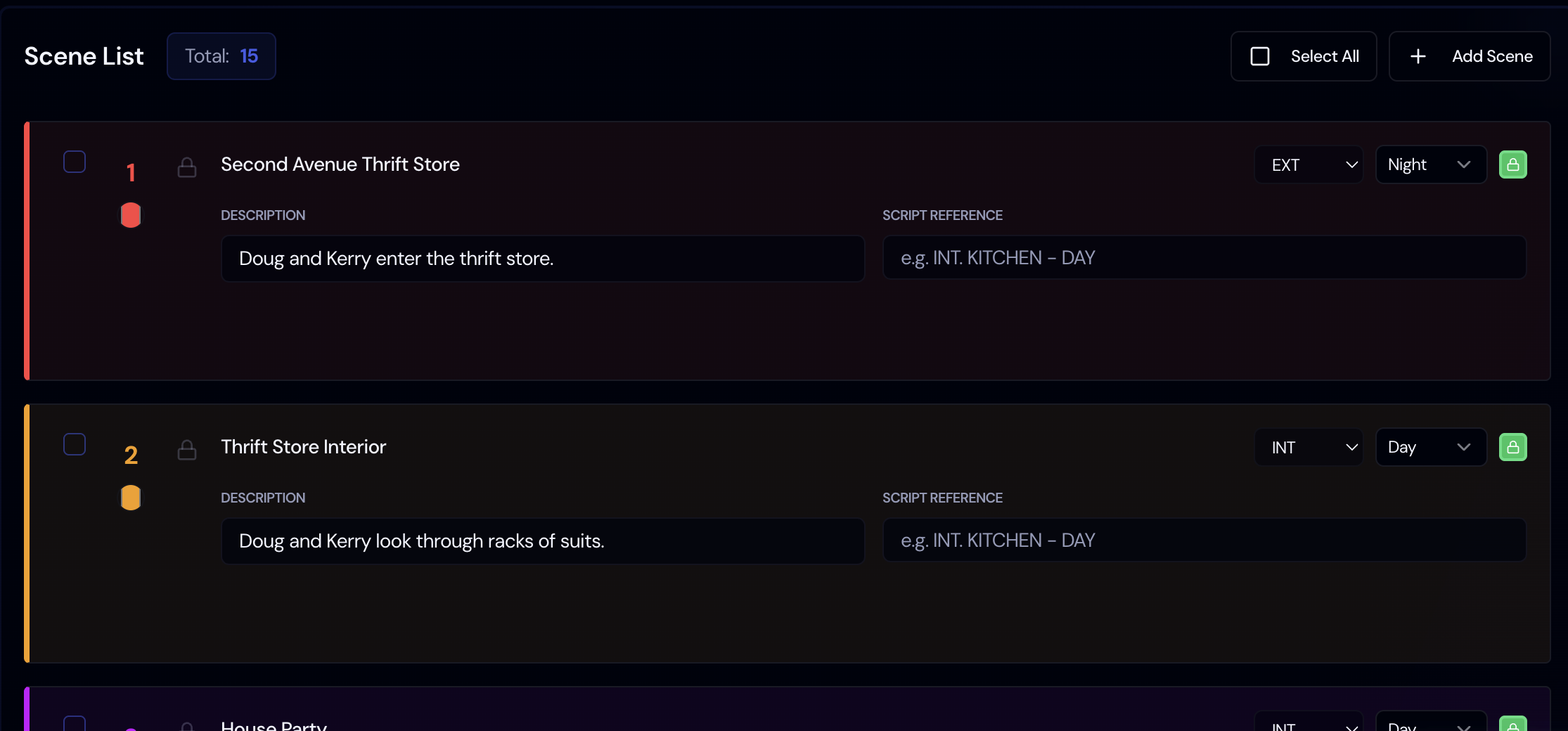
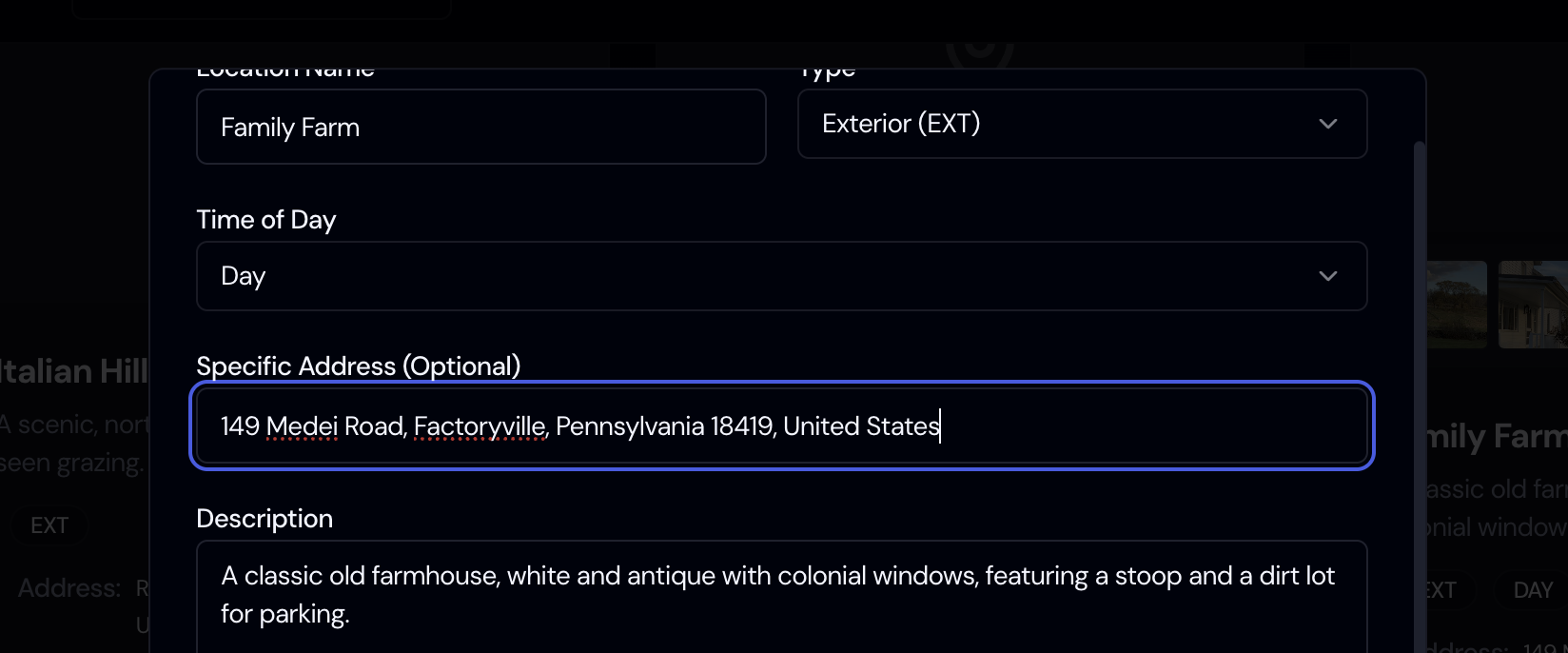
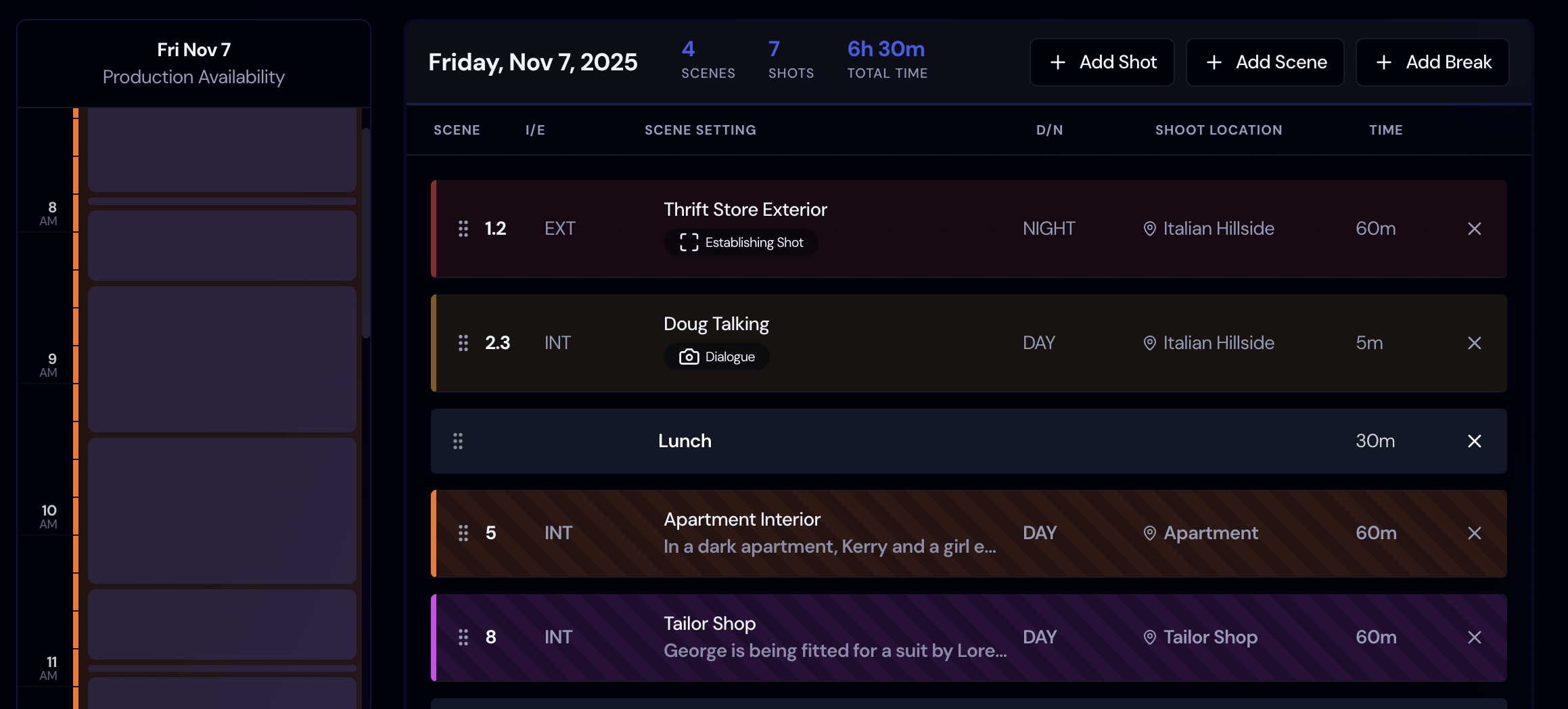
Unscripted projects in Storiara start without a script. You add shoot blocks as scenes by hand, track participants and crew with the availability form, save locations and your equipment list, arrange the days on the stripboard, and send reminders and call sheets by email. The script extraction features only apply if you later upload a script with scene headings.