
The location manager page covers fees, permits, and a day at a practical location. This page is about the prep-week problem underneath all of it: the schedule depends on locations, the location deals depend on the schedule, and both keep changing until the production meeting.
From scene headings to addresses
A script's set list and a location manager's address list are different documents, and the first job of prep is joining them. A small thriller might look like this after the second week of scouting:
| Script set | Scenes | Address | Holds |
|---|---|---|---|
| INT. SHERIFF'S OFFICE | 4, 17, 33, 60 | Old county annex, 212 Court St | Days 2, 3 |
| INT. HOLDING CELL | 18, 34 | Old county annex, 212 Court St | Day 3 |
| EXT. FARMHOUSE - DAY/NIGHT | 1, 9, 10, 52 | Hollis farm, Route 9 | Days 6 to 8 |
| INT. FARMHOUSE - KITCHEN | 11, 12, 53 | Hollis farm, Route 9 | Days 6 to 8 |
| INT. BARN | 54, 55 | Hollis farm, Route 9 | Days 7, 8 |
| INT. DINER | 26, 27 | Rosie's Diner, 88 Main St | Day 5, closed Mondays |
Six sets, three addresses. The table is also what the AD needs to group the board: every set at 212 Court St can shoot on consecutive days without a company move. Get this to the AD before the first-pass board is done, even if half the addresses are still options, and mark which ones are confirmed.
Holding dates against a moving schedule
A location agreement usually names dates, and the board changes after it's signed. The practical defense is to negotiate a little room: a primary set of dates and an alternate window, or a per-day rate that applies to any day in a range. When the AD moves the barn scenes from day 8 to day 11, a contract that names days 6 to 8 and allows days 9 to 12 at the same rate turns a crisis into an email.
Each time the one-line is reissued, compare it line by line against the holds. The changes that hurt are the quiet ones: a scene moved within the same week that now lands on the diner's closed day, or a night exterior that pushes wrap past the permit's end time. Check dusk and night work against the actual light with the sunrise and sunset planner, and confirm the film permit hours cover the call sheet's wrap time plus strike.
Parking and base camp, with the arithmetic
Most neighbor complaints start with parking, and parking is a numbers problem. Take a crew of 42 shooting at a house on a residential street, with a grip truck, an electric truck, a camera cube, a honeywagon, two cast trailers, a catering truck, and 28 personal cars after carpooling.
At roughly 20 feet of curb per car, 28 cars need about 560 feet of curb before driveways and hydrants. If the road can't give that, the crew parks at a lot and rides a shuttle. With a 15-passenger van carrying 14 crew, 42 people is three loads. If the lot is a 10-minute drive away, a round trip takes 20 minutes. Two vans can run it: van A leaves at 6:20 and arrives at 6:30, van B leaves at 6:25 and arrives at 6:35, and van A's second trip leaves at 6:40 and arrives at 6:50. Everyone is at base camp ten minutes before a 7:00 crew call, and the call sheet has to say "shuttle from the lot starts 6:20" rather than just the address.
Where the jurisdiction requires it, the parking permit and neighborhood notification go out before any of that happens. The location scouting checklist has the questions to ask at the scout so these numbers aren't guesses.
What leaves the locations department
Locations produces a lot of the call sheet's logistics section. For each shoot day, the coordinator needs the address with a cross street, crew parking instructions (or the shuttle lot and first run time), base camp location, the nearest hospital address, and any restrictions the crew should hear before arriving (no parking on the north side, quiet after 10 p.m., owner's dog in the backyard). Transportation needs the truck route and where trucks stage. The AD needs the time the location opens and the time it has to be empty.
The file behind each address stays with locations: signed agreement, certificate of insurance, permit, notification records, scout and wrap photos, and the signed location release. If the show changes location managers mid-prep, that file is what the next person inherits.
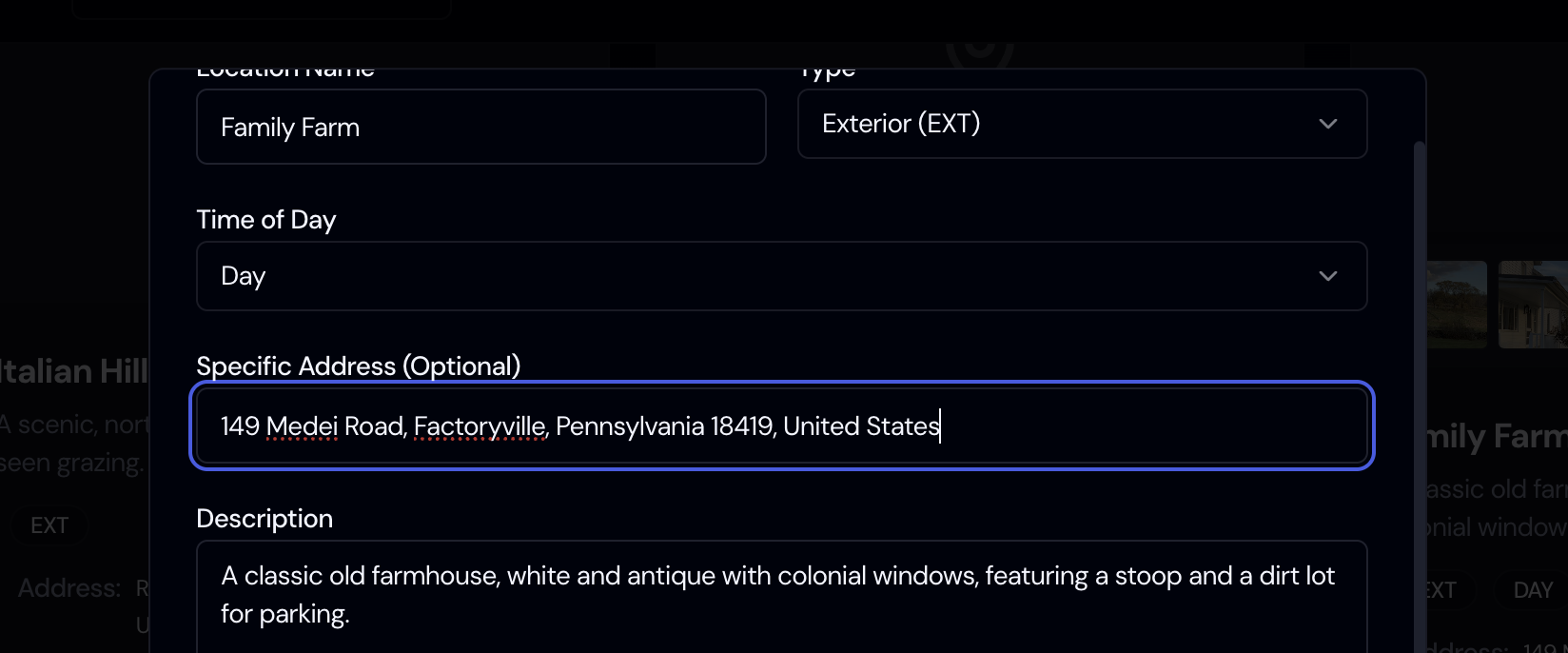
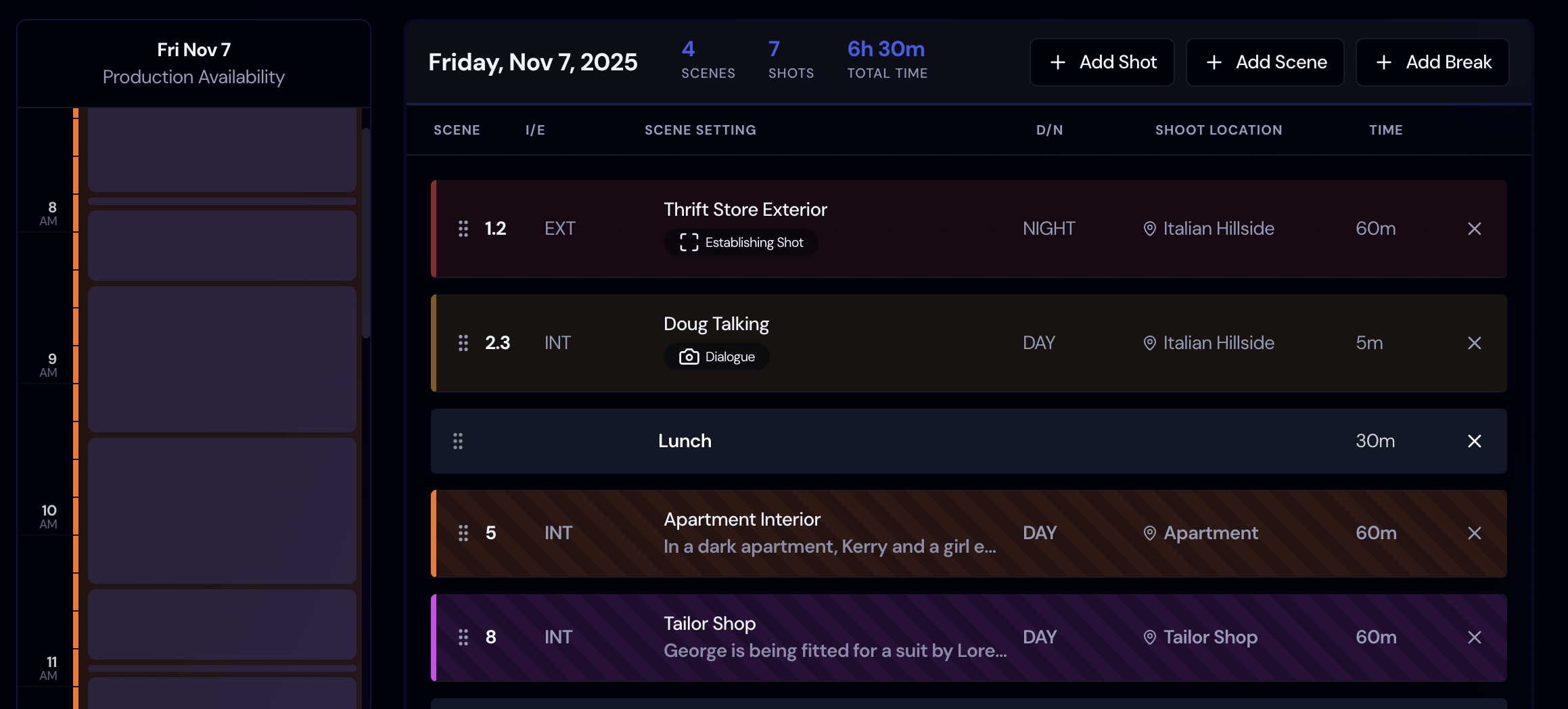
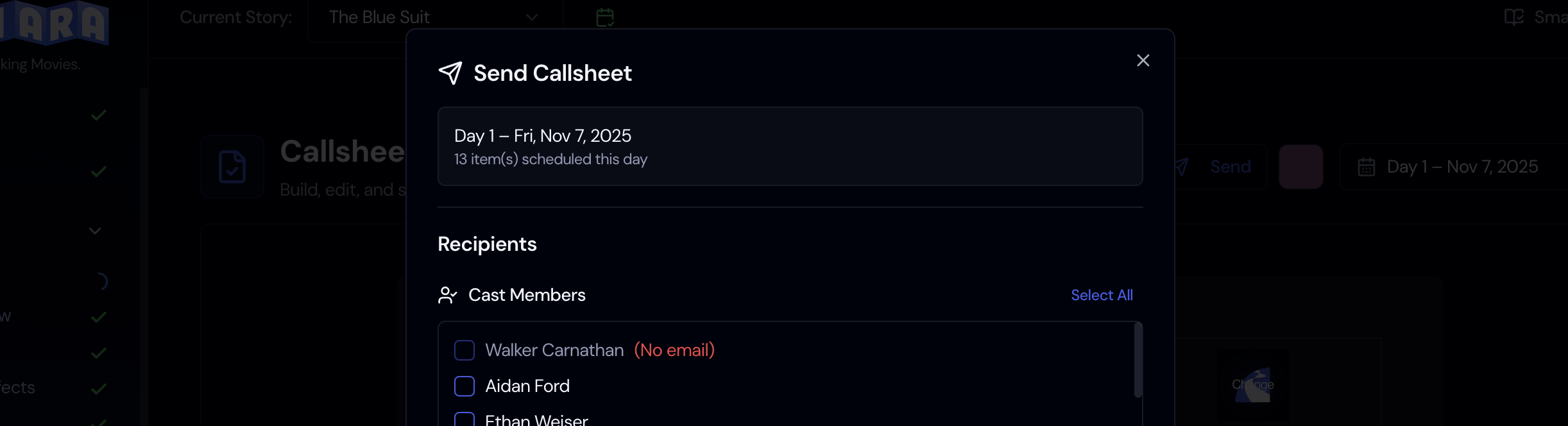
In Storiara
Locations in Storiara fills in from the uploaded script's scene headings. Each location takes an address with autocomplete and a Mapbox map, photos, a parking map upload, availability, and comments, and Find in script shows the scenes that use it. Location availability appears in the stripboard's day availability sidebar, though it doesn't block scheduling, and call sheets pull the day's location details with a weather forecast and a typed nearest-hospital field. Location lists import from CSV or Excel and print for the scout van. The locations and permits reading path collects the related guides.