
A music video usually starts with a number. The label or the artist's team commits a budget, sends the track to a few directors, and picks a treatment. The producer's job is to find out whether the treatment fits the number, and the answer is almost always "not quite." What follows is a planning process built around cutting the idea down without losing the parts the artist cares about.
Breaking down a treatment
A treatment is a mood document. Break it down into setups, where a setup is one location, one look, and one lighting state. For each, write down:
| Setup | Location | Look | Type | Camera support | Notes |
|---|---|---|---|---|---|
| 1 | Warehouse, stage left | Look A (white suit) | Performance | Dolly | Full-song passes, haze |
| 2 | Warehouse, stage left | Look A | Performance | Handheld | Tight passes |
| 3 | Rooftop | Look B (street) | Narrative | Steadicam | Golden hour only |
| 4 | Car interior | Look B | Narrative | Car mount | Process trailer or poor man's process |
| 5 | Warehouse, full set | Look C (band) | Performance | Crane | Band plus 20 extras |
That table tells you the video needs three looks, two locations plus a car, a crane day, extras, and a golden hour window. It's the document you take to the director when the budget says one location. The music video script breakdown guide covers the categories in more detail.
Playback math
Performance setups eat time in a way narrative shooting doesn't. Say the song runs 3:40 and the director wants five full passes on each of three performance setups:
- 3 setups x 5 passes = 15 passes
- 15 passes x 3:40 = 55 minutes of playback alone
- Add resets, cueing, and notes between passes (a minute or two each) and it's closer to 70 to 85 minutes, before any relighting.
Partial passes on specific sections cut that down. Agree on which sections need full coverage and which need only a chorus or a bridge. Playback needs a speaker loud enough for the artist to hear, a way to cue from any point, and timecode or a smart slate so the editor can sync takes. The music playback glossary entry explains the setup.
Scheduling around the artist
Crews should expect the artist's glam and wardrobe to take real time, and it varies a lot by artist. If the first shot is at 10:00 and glam is 90 minutes, the artist's call is 8:00 at the latest, and wardrobe fittings should happen on a prep day. Schedule the first shots so the crew can work without the artist: lighting the warehouse, shooting inserts, getting the rooftop plate. That way an artist running late costs you less.
Plan each look change as a block. Moving from Look A to Look B can take 30 to 60 minutes for wardrobe, hair, and makeup together, so shoot every setup in Look A before changing. Put the most important performance setup early in the day, while the artist has energy. Music video days tend to run long, so write a hard out into your location and crew deals and watch overtime.
Where the money goes
On a one- or two-day video, the biggest costs are usually crew, camera and lighting packages, the location or stage, art department, and the director's fee. Glam and wardrobe for the artist can be larger than expected. Post is often done fast and cheaply relative to features, but visual effects can blow a budget if they're in the treatment and nobody priced them. The music video budget template and how to budget a music video break out each line. Keep a contingency even if the label's number feels exact, because a shoot day that runs into overtime can consume it.
Paperwork that matters
- Location agreements with the exact hours, including any hard out.
- Talent releases for featured performers and extras, including dancers and band members who aren't signed to the label.
- Clearances for logos, artwork, and products that appear in frame.
- A call sheet that lists the artist's team (manager, glam, stylist, label rep) and when each is needed.
- Label delivery specs, confirmed before the shoot, so you know aspect ratios and versions needed (vertical cutdowns, clean versions).
Common music video mistakes
- Shooting performance last, when the artist is tired and the location is about to kick you out.
- Not rehearsing choreography before the shoot day.
- Too many looks. Each change costs time the budget doesn't have.
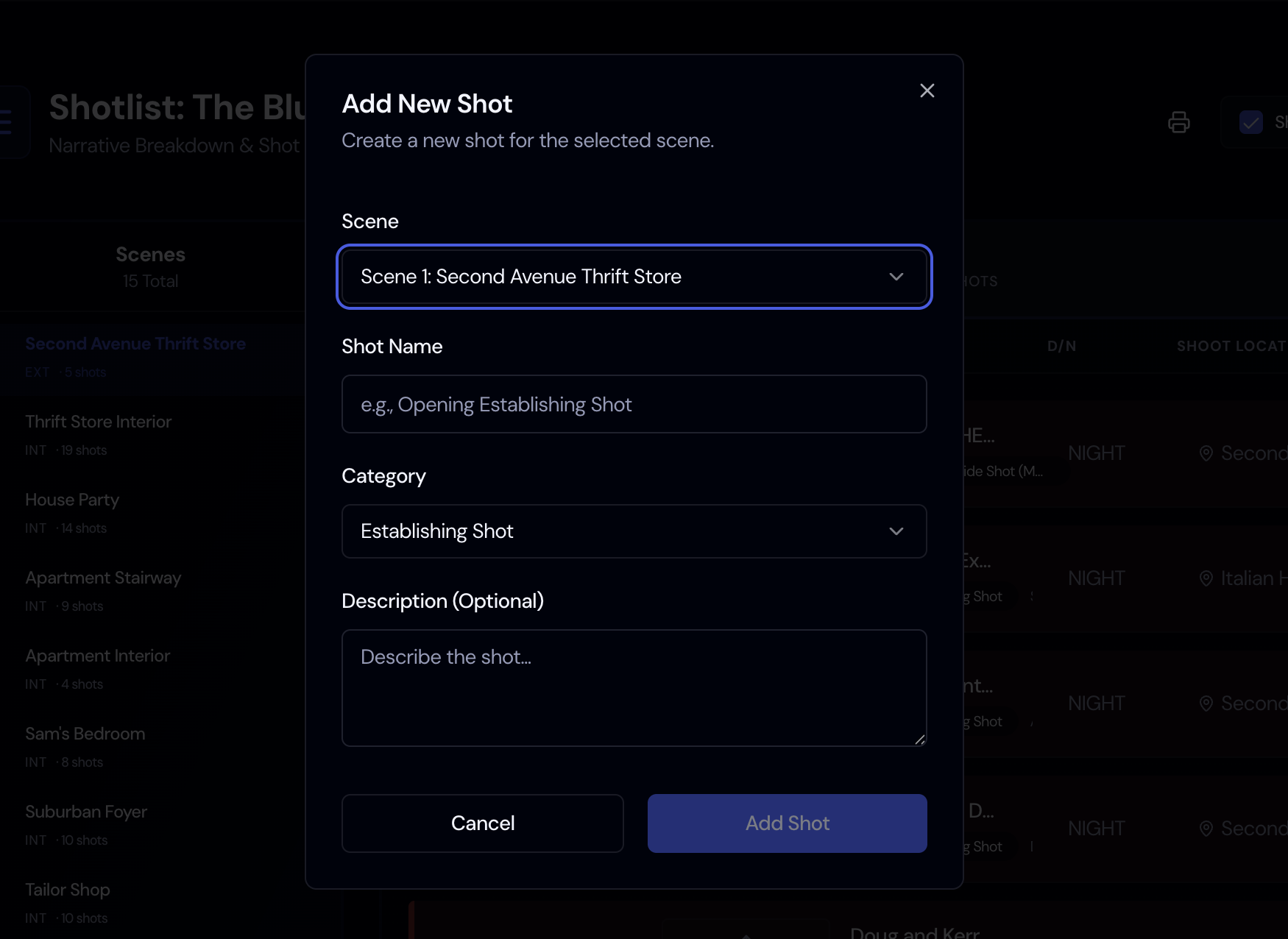
- No shot list. "We'll find it on the day" usually means the editor doesn't have enough coverage of the chorus.
Using Storiara for a video
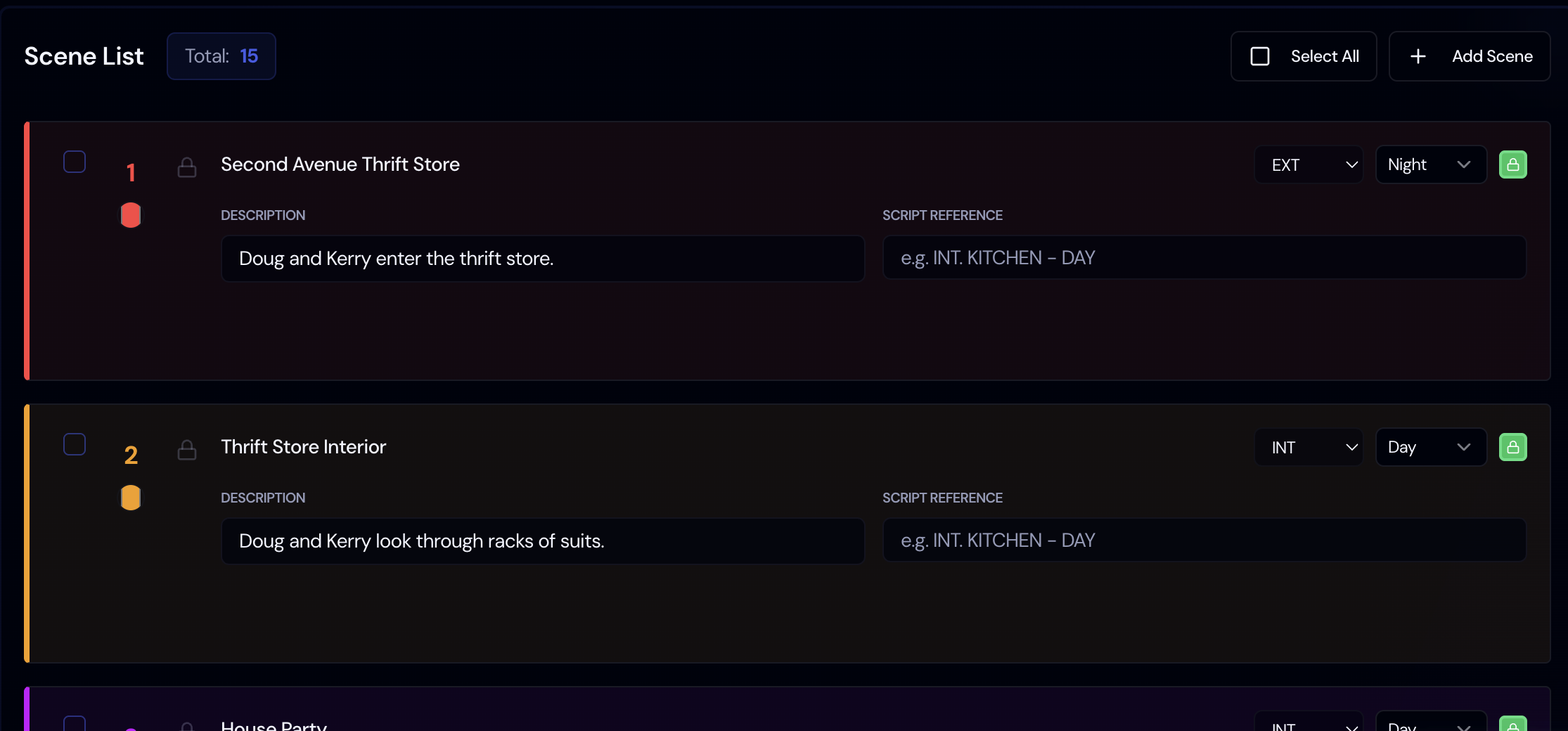
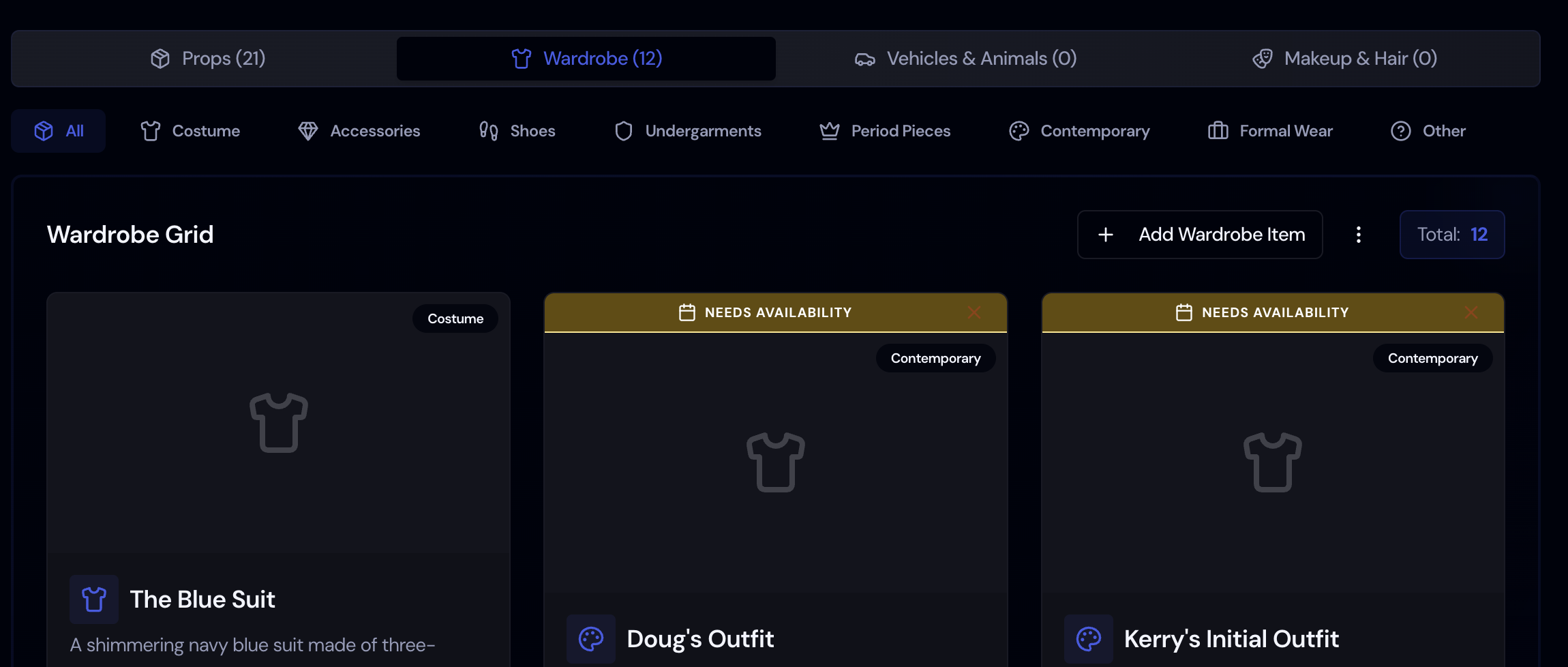
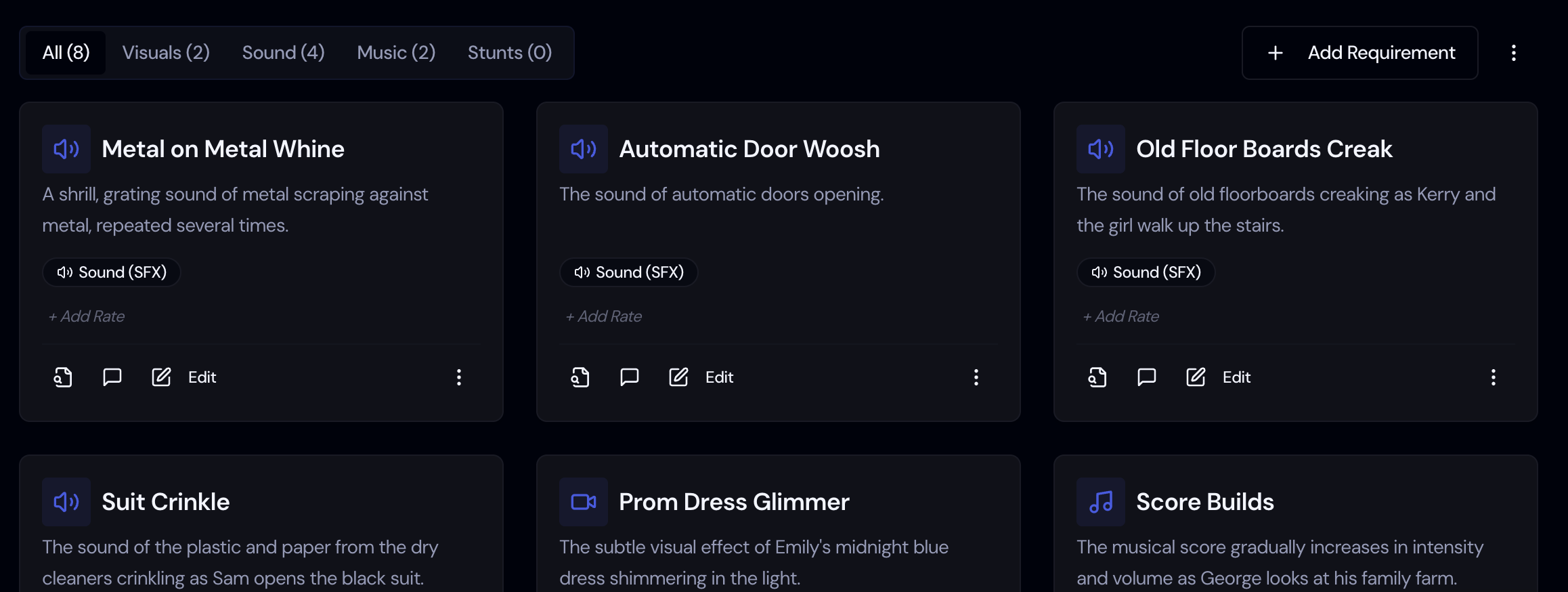
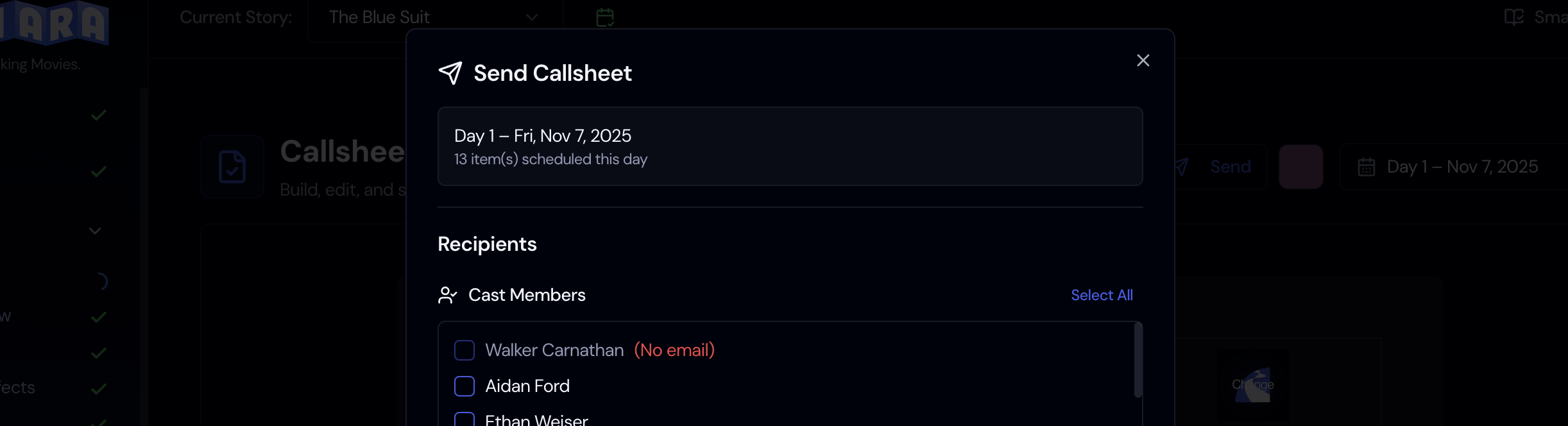
Start a music video in Storiara as an Unscripted project and add setups as scenes, or upload a script if there is one. Assets holds the artist's looks, Music & Effects holds playback, effects, and stunts, the shot list takes reference images, and the stripboard schedules shots in minutes. Call sheets include weather and go out by email or link.