
Film Production Software for Web Series

Spencer KaufmanBy Spencer KaufmanSeptember 14, 20263 min read

In short

A web series is usually shot as one block covering several episodes, so prep looks like a small TV season: break down every episode, number scenes by episode, cross-board the whole block by location, and track cast days and wardrobe continuity across episodes shot out of order. The savings come from shooting each location once; the risks are continuity and actor availability.

On this page
  1. Deciding how to board the block
  2. Numbering and paperwork for a mixed day
  3. Cast days across the block
  4. Where the money goes
  5. Mistakes on web series
  6. How Storiara works for a series

Cross-board a whole season by location and keep episodes in continuity.

What gets in the way

Six episodes, one apartment, six trips back

Shooting episode by episode means re-dressing and re-lighting the same apartment for every episode. Cross-boarding saves those days, and it scrambles continuity.

Wardrobe continuity across episodes

Episode 2 scene 5 and episode 5 scene 1 shoot on the same afternoon, a story week apart. Without a list by story day, the lead wears the same jacket in both.

Recurring actors with day jobs

Your series regulars work full time elsewhere, and a guest star is only free on two days. Holding them across a cross-boarded block is where the budget and the goodwill run out.

How it works in Storiara

  1. Step 1

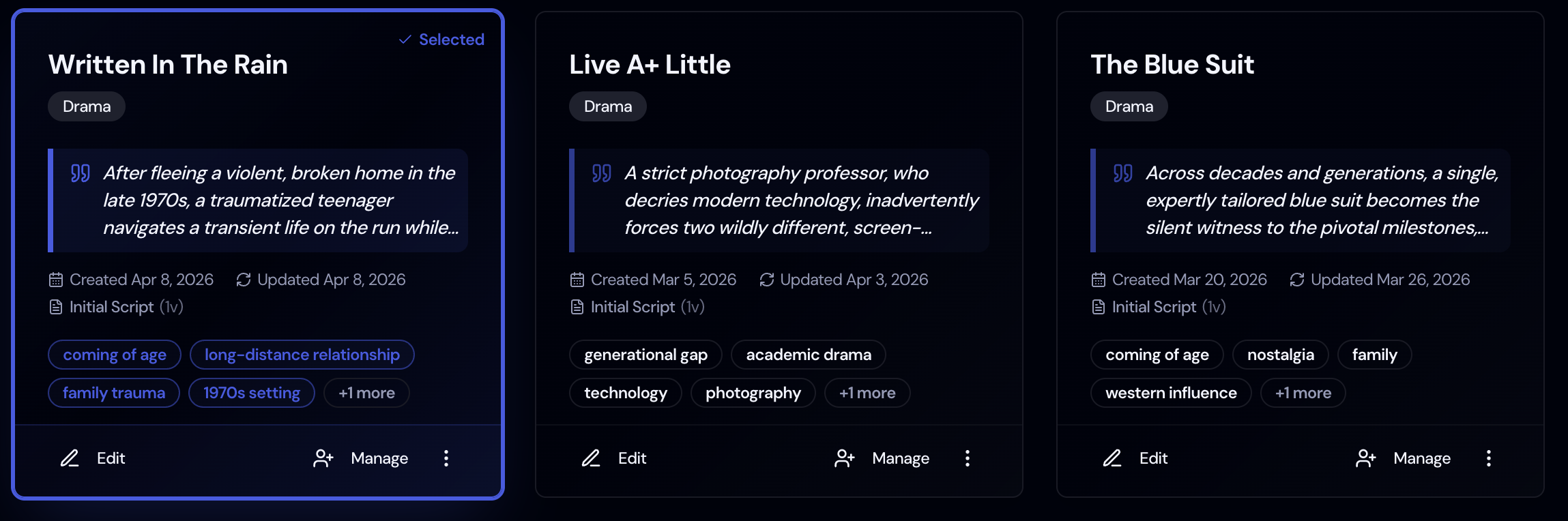
    Upload the block's scripts

    Combine the episodes you're shooting into one PDF, Word, or Final Draft file and upload it, so every scene lands on the same stripboard with its page count in eighths.

    Script breakdown software
    Upload the block's scripts in Storiara
  2. Step 2

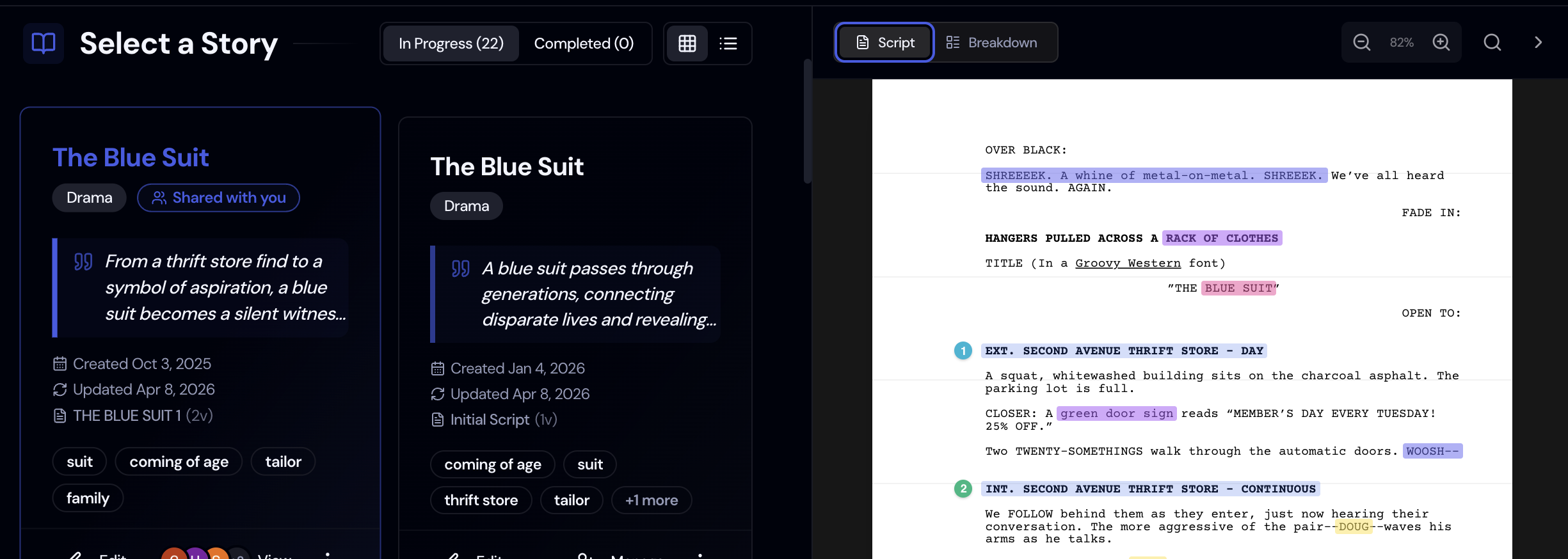
    Check recurring elements in the breakdown

    Use the Script & Breakdown View to confirm wardrobe, props, and extras across episodes, highlighting anything the extraction missed and adding it as the right element.

    Props and wardrobe tracking
    Check recurring elements in the breakdown in Storiara
  3. Step 3

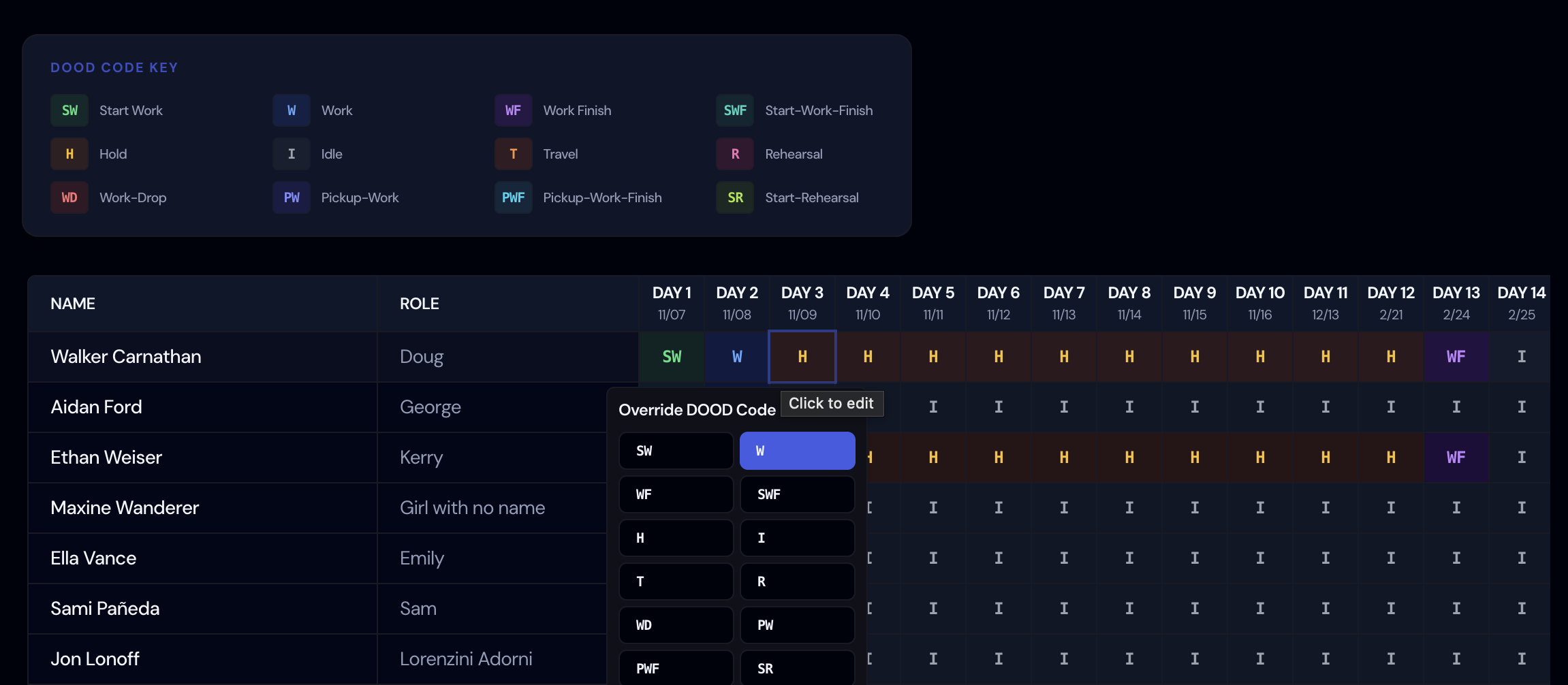
    Cross-board by location

    Drag scenes from every episode onto shoot days grouped by location. The Day Out of Days view fills in each actor's work and hold days from the board.

    Film shooting schedule software
    Cross-board by location in Storiara
  4. Step 4

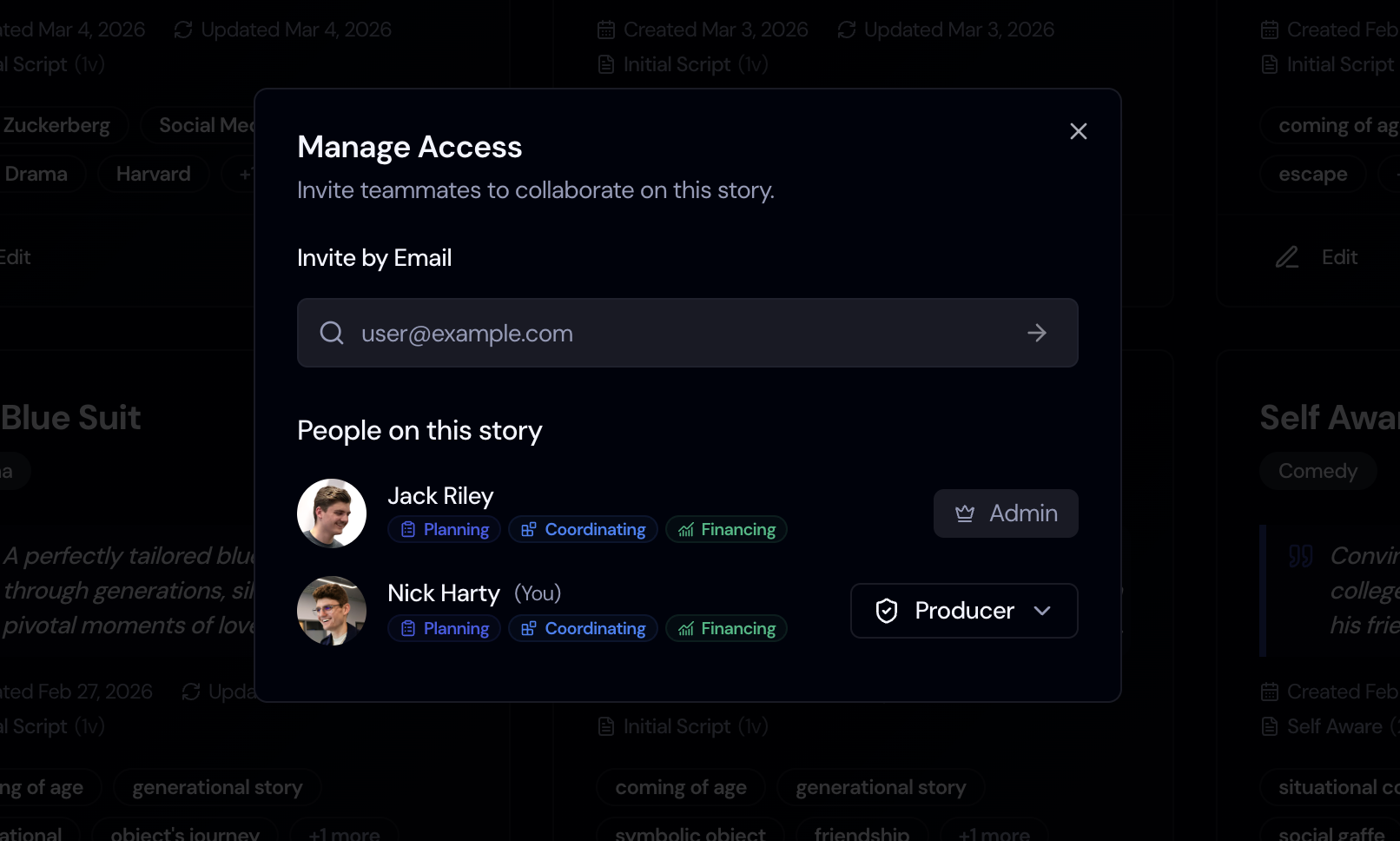
    Bring in the team with the right access

    Share the project with your co-creators and department heads and give each a role, from Producer to Department Head, or a custom set of pages.

    Bring in the team with the right access in Storiara
  5. Step 5

    Send call sheets and reminders

    Email each day's call sheet or share its link, and schedule reminders to go out ahead of the shoot.

    Call sheet software
    Send call sheets and reminders in Storiara

A web series has the paperwork of a TV season with the resources of a short film. You might have six eight-page episodes, a crew for eight days, and a cast of friends and working actors with other jobs. The way to afford it is to shoot the season as a single block, and that decision shapes everything else in prep.

Deciding how to board the block

Take a first season of six episodes at about 8 pages each, 48 pages total, with three main locations: the apartment, the coffee shop, and the office. Here's what the two approaches look like:

ApproachApartment visitsCoffee shop visitsOffice visitsRough days
Episode by episode65410 to 11
Cross-boarded by location1 (3 days)1 (2 days)1 (2 days)8

At 48 pages over 8 days you're averaging 6 pages a day, which is doable for dialogue-driven comedy and tight for anything with action. Cross-boarding saves the load-ins and gives the art department one dress per set. The cost is that actors play scenes from different episodes back to back, and every department has to track which episode and story day they're in. Block shooting vs cross-boarding and the cross-boarding entry cover the tradeoff.

Numbering and paperwork for a mixed day

Once episodes mix on a single day, scene numbers need to show the episode. Prefix them: episode 2 scene 5 becomes 205, episode 5 scene 1 becomes 501. Use those numbers on strips, call sheets, slates, and in the editor's bins. The scene numbering rules post has conventions for inserted and omitted scenes.

Assign a story day to every scene and count them across the whole season. If episode 2 happens on a Tuesday and episode 3 picks up that night, wardrobe needs to know the lead is in the same outfit. A season-long wardrobe breakdown organized by story day, plus a continuity log with photos, is what keeps a cross-boarded series from looking cheap. Hair is the other giveaway: a haircut in the middle of the block will show up on screen.

Cast days across the block

Build the Day Out of Days as soon as the board exists. Series regulars might work six of eight days. The guest actor in episodes 3 and 5 is the one to watch: if their scenes land on day 2 and day 7, you're asking them to hold or come back, and either costs money or a favor. Moving one coffee shop scene can often put all their work on consecutive days.

If you're using union performers, SAG-AFTRA's New Media Agreement is the usual starting point for series released online, though the right agreement depends on budget and distribution. Get the paperwork filed before the first day and budget fringes on performer pay.

Where the money goes

Web series budgets are mostly shoot days and food, then post. Because cross-boarding blends episodes, budget the season as a whole and divide by episode count only for pitch decks or crowdfunding pages. Costs that catch series producers:

  • Standing sets. If you're dressing an apartment for three days, you may need to rent it for four to include the dress and strike.
  • Continuity photography and a dedicated person to track it.
  • Post for six episodes, including a sound mix and color pass per episode, plus titles and deliverables for each platform.
  • Marketing assets: key art, trailers, and vertical cutdowns for social.

The short-form series budget post goes line by line.

Mistakes on web series

  • Writing episodes before deciding on locations. Rewrite scenes into your three best locations before you board.
  • Skipping a table read for the full block, which is when continuity problems across episodes surface.
  • Treating each episode's shoot day as a separate call sheet world. Mixed days need call sheets that list the episode for every scene.
  • Losing an actor between seasons without having any release or option language in their agreement. Talk to an entertainment lawyer before season one wraps.

How Storiara works for a series

Combine a block's episodes into one script file and upload it so every scene sits on the same stripboard. Storiara pulls scenes, characters, wardrobe, and props from the pages, gives you a manual board to cross-board by location, and fills the cast Day Out of Days from it. Call sheets go out by email or link, and collaborators can be given roles that limit which pages they see.

Frequently asked questions

Should you shoot a web series episode by episode or all at once?

Most independent series save money by cross-boarding: shooting every episode's scenes at one location in a single visit. Episode-by-episode shooting is simpler for continuity and actor availability but costs more days. The right answer depends on how many locations repeat across episodes.

How do you number scenes in a web series?

A common convention is to prefix the scene number with the episode, so episode 1 scene 4 is 104 and episode 3 scene 12 is 312. It keeps strips, call sheets, and slates readable when episodes are mixed on the same day.

Which SAG-AFTRA agreement covers web series?

Series made for online release are often covered by SAG-AFTRA's New Media Agreement, depending on budget and distribution. Terms change, so check the union's current agreement before offering roles.

How much does a web series cost per episode?

There's no standard figure. Cost per episode depends on crew pay, locations, cast agreement, and how many episodes share a block. Build a season budget first and divide by episodes, since cross-boarding makes per-episode budgets misleading.

Try it on your own script

Producer is $39.99 a month with unlimited stories, so each season can be its own project. Extra collaborators are $19.99 a month each.

Start Planning for Free
Spencer Kaufman

Spencer Kaufman

Revenue & Strategy Lead, Storiara

Revenue and strategy expert growing Storiara's market presence and building partnerships with filmmakers and studios worldwide.