
Most production companies with a small staff run the same way. A few producers each carry a project or two, a head of production (often the owner) signs off on budgets and hires, and nearly everyone who does the physical work is freelance and leaves at wrap. The company keeps the relationships and the reputation. Unless somebody makes a point of it, it doesn't keep the paperwork.
What lands on the head of production's desk
On a mixed slate the weekly questions are rarely creative. Is the feature still 26 days after the new draft? Did the commercial bid carry the second location fee? Which crew are held for which dates? Who approved the extra camera week on the documentary?
Answering those means pulling numbers from producers who each built their shooting schedule and top sheet differently. One uses a standard chart of accounts, another groups costs by department with no account numbers, and a third never wrote down how many prep weeks the budget assumes. A comparison that should take ten minutes takes an afternoon.
Most heads of production end up keeping a slate table by hand, something like this:
| Project | Stage | Script | Est. shoot days | Budget draft | Next decision |
|---|---|---|---|---|---|
| THE LONG DRIVE (feature) | Prep, week 3 | 104 pages | 26 | $1.85M | Lock the farmhouse by Friday |
| Harbor Bank spots (3 x :30) | Bid | 6 pages | 2 | $140K | Client sign-off on director |
| SALT FLATS (documentary) | Development | Outline | 14 interview days | $410K | Grant application due |
The 26 days on the feature is 104 pages at 4 pages a day. If the producer's board comes back at 29, the head of production wants the reason before the budget goes to the financier. At a daily burn of $38,000 for crew, gear, and locations, three extra days add $114,000 ($38,000 x 3) before fringes. The shoot days estimator and film budget estimator give a quick outside check on a producer's first pass.
Where company paperwork falls apart
Freelance turnover is the first break. The coordinator who built the crew contact list, the vendor list, and the location files wraps, and those files sit in a personal Google Drive. On the next show a new coordinator starts from a blank sheet and requests the same certificates of insurance from the same rental houses.
Script versions are the second. The writer sends pink pages to the director and producer, the 1st AD is still boarding blue, and the line producer's budget was built on the white draft. Everyone says "current script" and means a different file. Production offices fix this with revision colors and a distribution log, and the fix only holds if one named person owns the log.
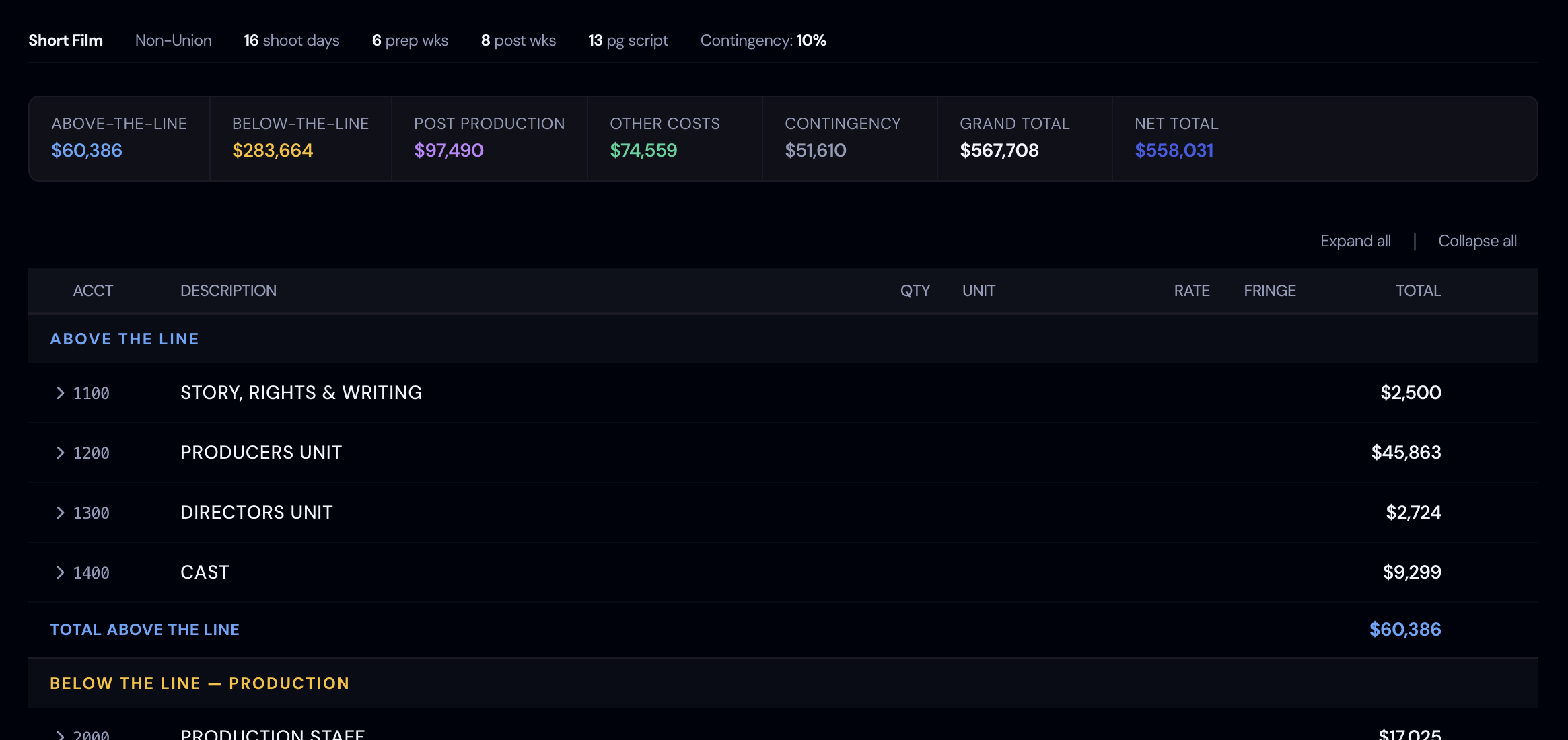
The third is format drift. When every producer invents a budget layout, nothing rolls up to the company level, and accountants, completion guarantors, and financiers all expect a familiar chart of accounts: above-the-line in the 1100 to 1400 accounts, production staff starting at 2000, post in the 4000s. Requiring that on day one is far easier than remapping a finished budget. The film chart of accounts guide lays out the usual structure.
A house standard that producers will follow
A standard that runs to twenty pages gets ignored. The ones that stick decide a short list of things and enforce them at greenlight:
- One budget format for every project, including commercials and branded work, so top sheets can sit side by side.
- One place where the active script lives, with a named person who distributes revisions.
- A project file that stays with the company after wrap: crew list, vendor list, location agreements, releases, and deal memos.
- Who sees what. Department heads need the schedule and call sheets. Very few need the producer fee or the overhead fee line.
- A pre-greenlight review built on the pre-production checklist.
That last review earns its keep on small jobs. A two-day commercial can skip most feature paperwork, but it still needs signed location releases, an insurance certificate for every location that asks for one, and a call sheet with the nearest hospital typed in before anyone rolls.
Commercial and branded work also tends to reuse crews. If the same gaffer and key grip do eight jobs a year for you, their rates, kit rentals, and contact details should live somewhere the next producer can find them without texting the last producer.
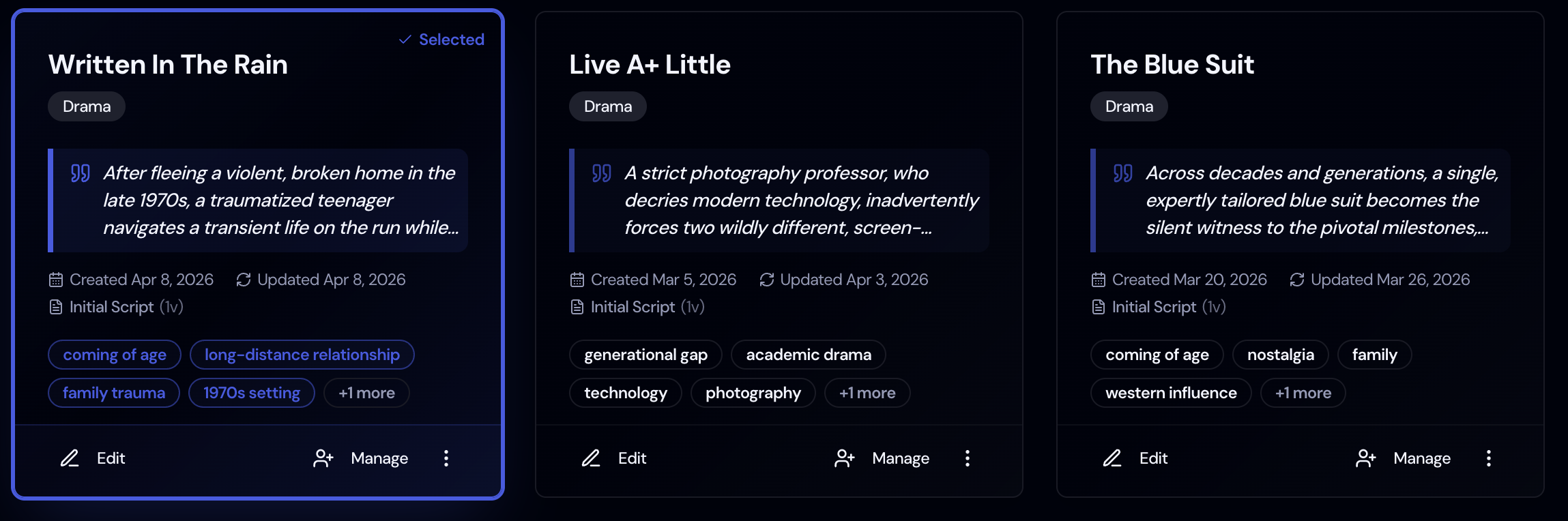
Running a slate in Storiara
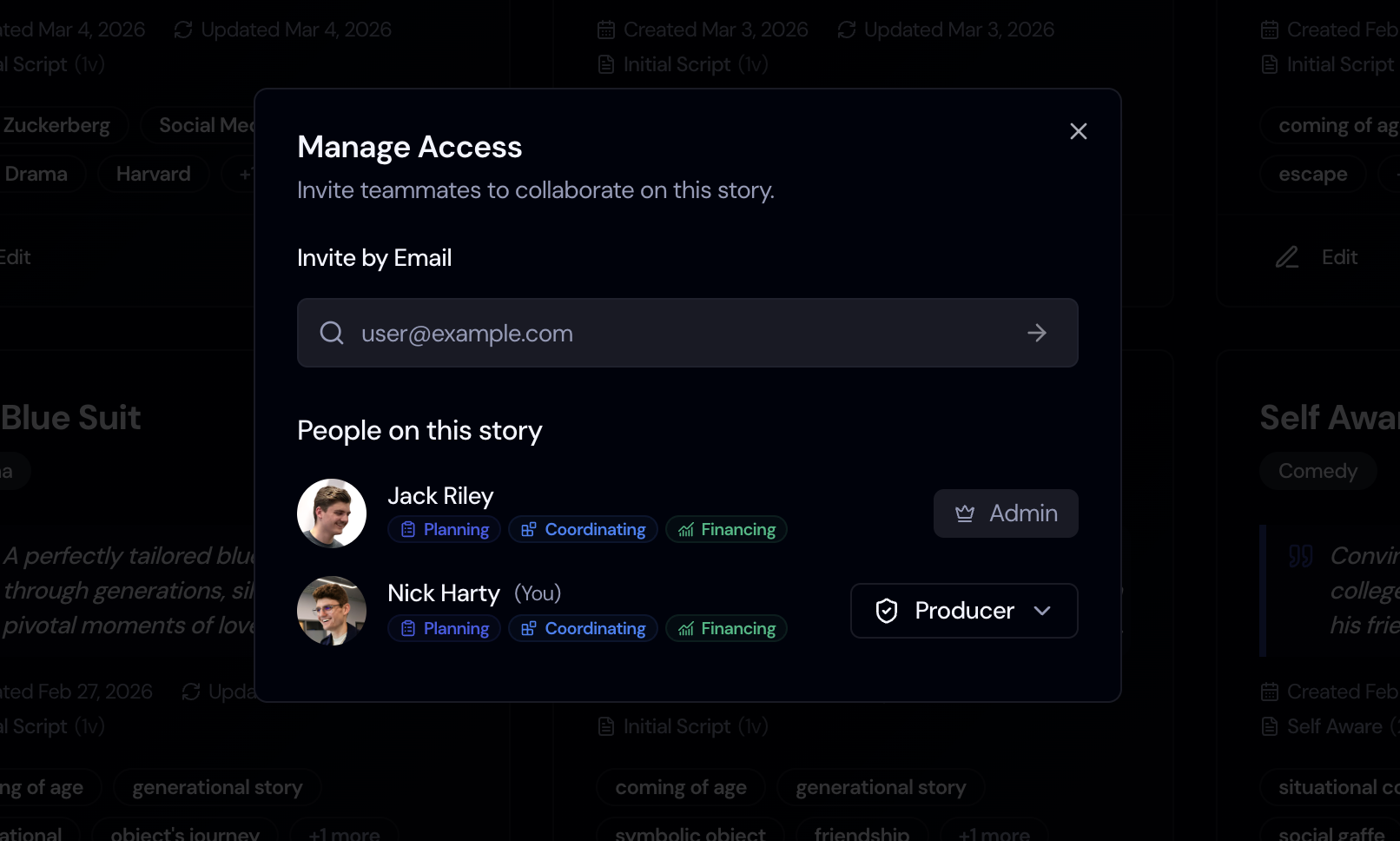
Each project is a story in My Stories, created by uploading a PDF, Word, or Final Draft script. Storiara pulls scenes, locations, characters, props, wardrobe, and music and effects from it, and producers mark stories In Progress or Completed as the slate moves. Collaborators are invited per story, so the feature's AD team never sees the commercial. A Custom role can limit someone to, say, Schedule, Callsheets, and Locations with no budget access. Producers can duplicate a story to test a shorter version of a project without touching the original. The Producer plan is $39.99 a month plus $19.99 for each additional collaborator, and Studio pricing is custom; details are on the pricing page. New producers on staff can start with the pre-production reading path.