
On a short, the calendar is the budget. You might have a crew for Saturday and Sunday and a lead actor who has to leave by 6 p.m. on Sunday for a flight. Nothing else you plan matters if the script doesn't fit inside those hours, so work out the page math before you spend a dollar.
Doing the page math honestly
Break the script into eighths with the page count calculator or by hand, then total it by location. Take a 12-page short with three locations:
| Location | Scenes | Pages | Notes |
|---|---|---|---|
| INT. APARTMENT | 1, 2, 5, 7 | 6 2/8 | Mostly dialogue |
| EXT. PARKING LOT - NIGHT | 3, 6 | 3 4/8 | Car, night lighting |
| INT. BAR | 4 | 2 2/8 | Background extras |
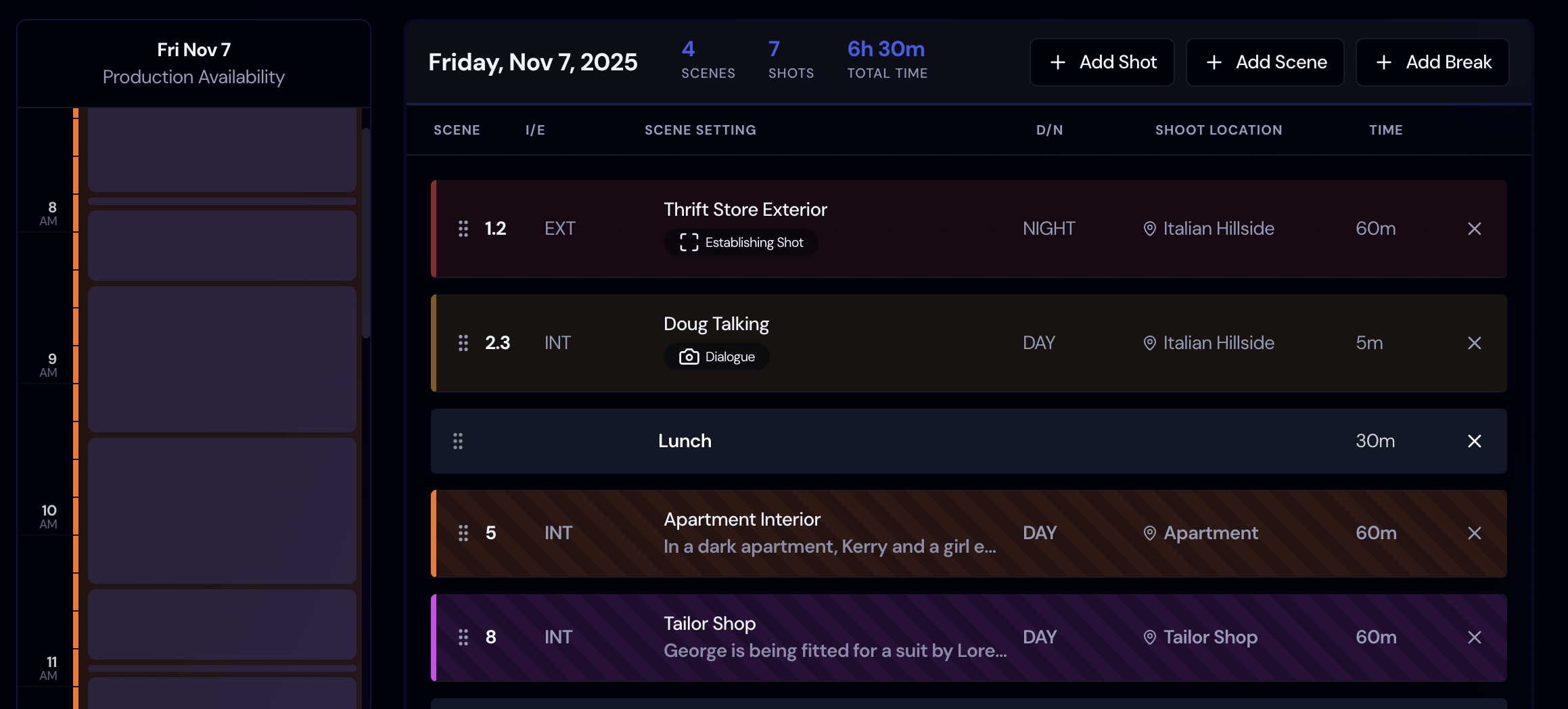
Saturday could be the apartment (6 2/8 pages) and Sunday the bar in the afternoon plus the lot after dark (5 6/8 pages). That looks even, but Sunday has a company move, extras who need wrangling, and a night exterior that can't start until sunset. The sunrise sunset planner tells you when you actually get dark. If sunset is at 8:10 p.m. and your lead leaves at 6, the parking lot needs a different day or a different actor call. This is the kind of thing the weekend short film schedule guide walks through.
Short film days also run slower than people expect in hour one. Gear arrives in personal cars, nobody has worked together, and the first setup takes twice as long as the tenth. Put a simple scene first.
Where a small budget actually goes
With a crew working for credit, the money shifts to things that can't be donated:
- Food. Feed people well and on time. A crew of 15 over two days is 30 lunches plus craft services, and it is the fastest way to lose goodwill if you skimp.
- Gear and a vehicle to move it. Rental houses will ask for a certificate of insurance, and short-term production insurance is cheaper than replacing a lens.
- Location costs, even for "free" places: cleaning, a thank-you payment, parking.
- Post. Color, a sound mix, and music licensing often cost more than the shoot.
- Festival fees, which add up quickly if you submit widely.
The short film budget template and the short film budget breakdown have the full list of lines. Keep ten percent aside for the thing that breaks.
The paperwork that matters on a short
Short films run into trouble later, at festivals and distribution, when the paperwork was never done. Before the first day:
- Get a talent release form signed by every actor, including friends doing a favor.
- Get a location release signed by the person who actually has the authority to grant it (the landlord, not the tenant, in many cases).
- If you're using SAG-AFTRA performers, sign the right agreement for the project before they work. The union has short-project and low-budget agreements; read SAG-AFTRA low-budget agreements and check the union's site for current terms.
- Keep a short deal memo for crew, even unpaid, stating credit, copies of the film, and meals.
- Check whether your location needs a film permit. Street and park shoots usually do.
Music is the most common festival problem. A track you love that you haven't licensed is a track you'll have to replace, so pick music you can clear or commission a composer during prep.
The call sheet does more work than you'd think
On a volunteer crew, the call sheet is often the only document people read. Put the parking instructions, the exact address, the nearest hospital, meal time, and the weather on it. Keep call times realistic: if hair and makeup takes 45 minutes and your lead is in the first shot at 9:00, the actor's call is 8:00 at the latest, and earlier if they need wardrobe. The guide to setting call times covers the back-timing, and the call sheet template has every field.
Send it the night before at a reasonable hour, and get a reply from every department head.
Mistakes specific to shorts
- Writing a short with five locations. Each company move means wrapping out, loading cars, driving, parking, and loading back in, and a two-day shoot can't absorb many of those. Consolidate in the rewrite.
- Scheduling a night exterior as the last thing on the last day, when everyone's tired and the actor has a hard out.
- Forgetting room tone and wild lines, then paying for ADR.
- No backup for a no-show. Know who can step into a small role, and have a second person who can run sound.
Using Storiara on a short
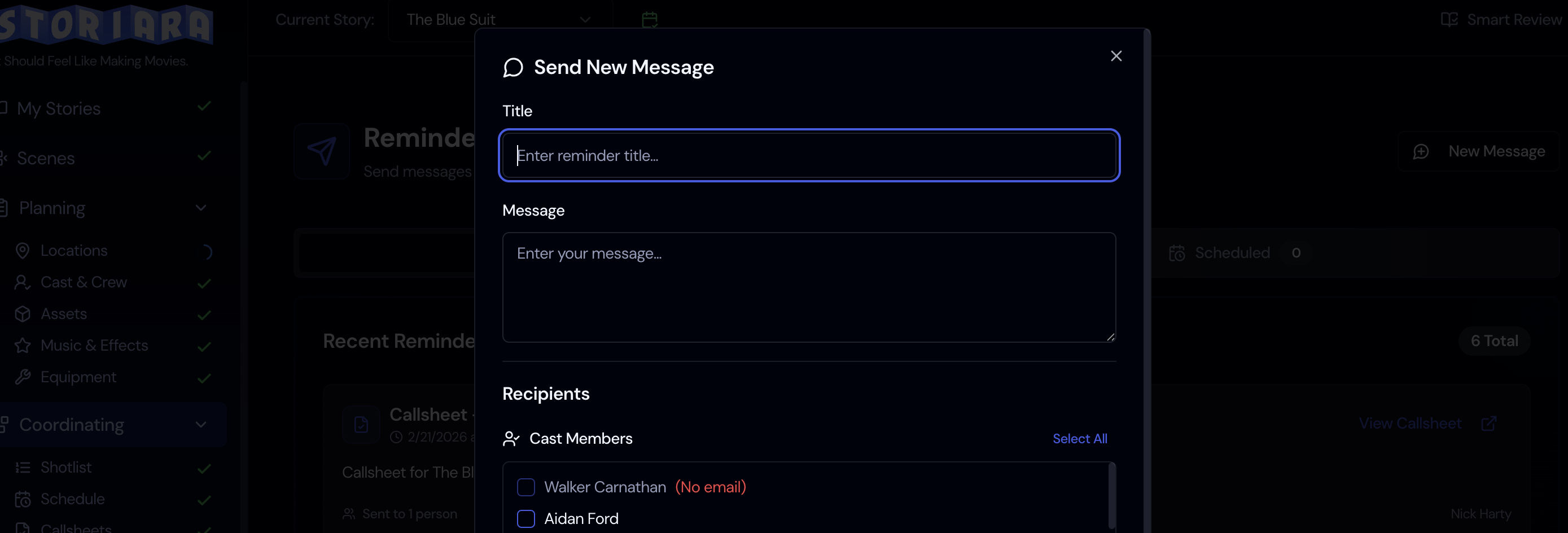
For a short, the useful parts are the breakdown from your script (PDF, Word, or Final Draft), the no-login availability form, a manual stripboard for your shoot days, and call sheets you can email or share by link. Reminders can send the call sheet on a schedule, anywhere from the day of to seven days before.