
A student film has two sets of requirements. The script asks for locations, actors, and a certain number of days. The school adds its own: faculty sign-off on the script, a safety review, an equipment reservation, insurance paperwork, and a due date for the finished cut that doesn't move. The crews that do well plan backward from the school's deadlines first and fit the script inside them.
Working backward from the checkout window
Suppose the cut is due December 5 and the cage has your camera package reserved November 7 to 10. Counting back:
| Milestone | Date | Why it sits there |
|---|---|---|
| Rough cut screening | Nov 21 | Two weeks of editing after the shoot |
| Shoot days | Nov 7 to 9 | Equipment goes back the morning of Nov 10 |
| Tech scout and final schedule | Oct 31 | One week before the shoot, so actors and locations confirm |
| Faculty approval of schedule and safety plan | Oct 24 | Many programs want paperwork a week or two ahead |
| Locations locked, releases signed | Oct 20 | Approval packets often need the signed release |
| Casting done | Oct 17 | Actors need the dates before you can lock them |
That's roughly five weeks of prep for a three-day shoot, and it's tight. Start the pre-production checklist the week the script is approved. The guide to planning a student film in 30 days and the thesis film pre-production checklist go week by week.
Scheduling a crew of classmates
On a professional set, the crew is available all day because it's their job. On a student set, people have classes, part-time jobs, and their own projects. Collect everyone's fixed commitments in one place before you pick dates, and pick the shoot days around the three or four people you can't replace (director, DP, sound, lead actor).
Keep days short. A 12-hour student shoot followed by an 8 a.m. class is how people fall asleep driving home. Many schools cap shoot-day length or require rest time between days, so check the handbook and apply a turnaround rule even if nobody's union. Budget roughly three to five pages a day on your first projects, and fewer if you're shooting heavy coverage.
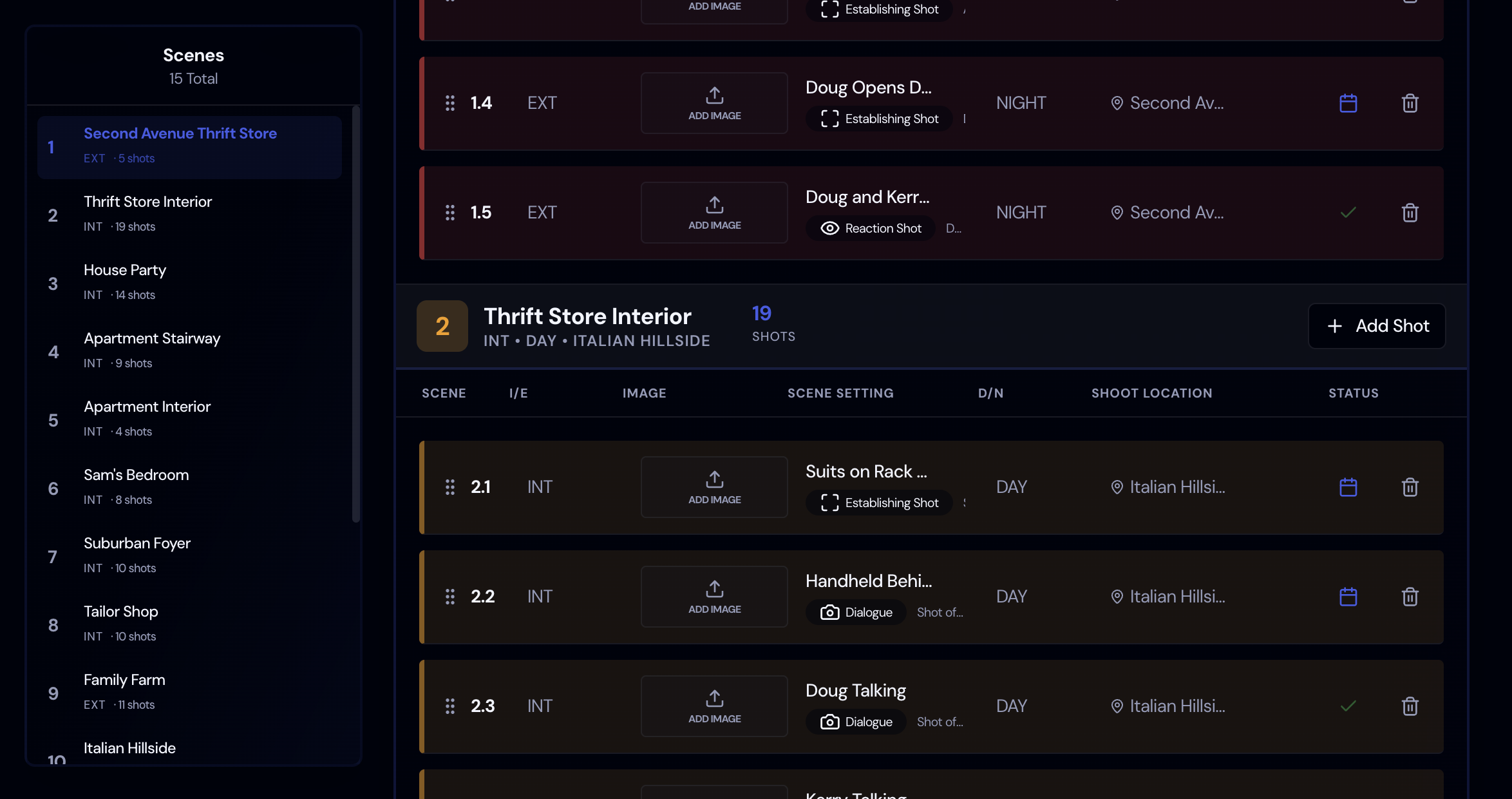
Build a shot list before you build the schedule. Student directors often plan 40 setups for a day that fits 20, and the shot list is where that shows up. Count the setups, give each one a realistic time for your crew's speed (first-year crews are slower than they think), and see if the day holds. If it doesn't, combine shots into a master shot with fewer inserts.
The paperwork schools actually check
- Script approval, sometimes with a separate sign-off for anything involving weapons, stunts, vehicles, water, or minors.
- Location releases. Signed location release forms, plus the school's insurance certificate if the property owner asks for one.
- Talent releases for every actor and background performer. Use a talent release form.
- Union paperwork if you cast SAG-AFTRA performers. The union's Student Film Agreement covers student coursework; file it well before the shoot.
- A minor work permit and a studio teacher if anyone under 18 is acting in a state that requires one. Read working with minors on set.
- A call sheet for every day, even a one-location shoot with eight people.
Schools see the same problems every semester: a location release signed by a roommate instead of the landlord, prop weapons nobody told campus security about, and music lifted from a streaming service. Fix all three during prep.
Where the (small) money goes
Most student films run on the student's own money, so it's worth budgeting line by line anyway. Food for the crew, location fees or donations, expendables (gaffer tape, batteries, hard drives), costume and prop purchases, and festival submissions add up. Use the short film budget template and keep receipts, since many thesis programs ask to see the budget.
For instructors
The paperwork is the teaching tool. A student who has built a breakdown, a stripboard, a Day Out of Days, and a call sheet from their own script understands why the schedule looks the way it does. Many film schools assign those documents as graded milestones before the shoot is approved.
How Storiara works for a class
An instructor creates a class in My Classes and shares the six-character join code. Students join from Account Settings and get Pro-level access for the class. Assignments carry a title, description, due date, and a submission type (a project, a file, or both), and students submit from My Assignments. Instructors see who submitted what; grading stays in the school's own system. Inside each project, students get the script breakdown, shot list, stripboard, and call sheets they'd use on any production.