

A low-budget feature lives or dies on the number of shoot days, because nearly every below-the-line cost is a day rate or a weekly rate multiplied by the calendar. Crew, gear, locations, catering, per diems, insurance: they all scale with days. The first real budget question is how many days the script needs, and you can't answer it honestly until the script is broken down.
Start with page counts and a day count you can defend
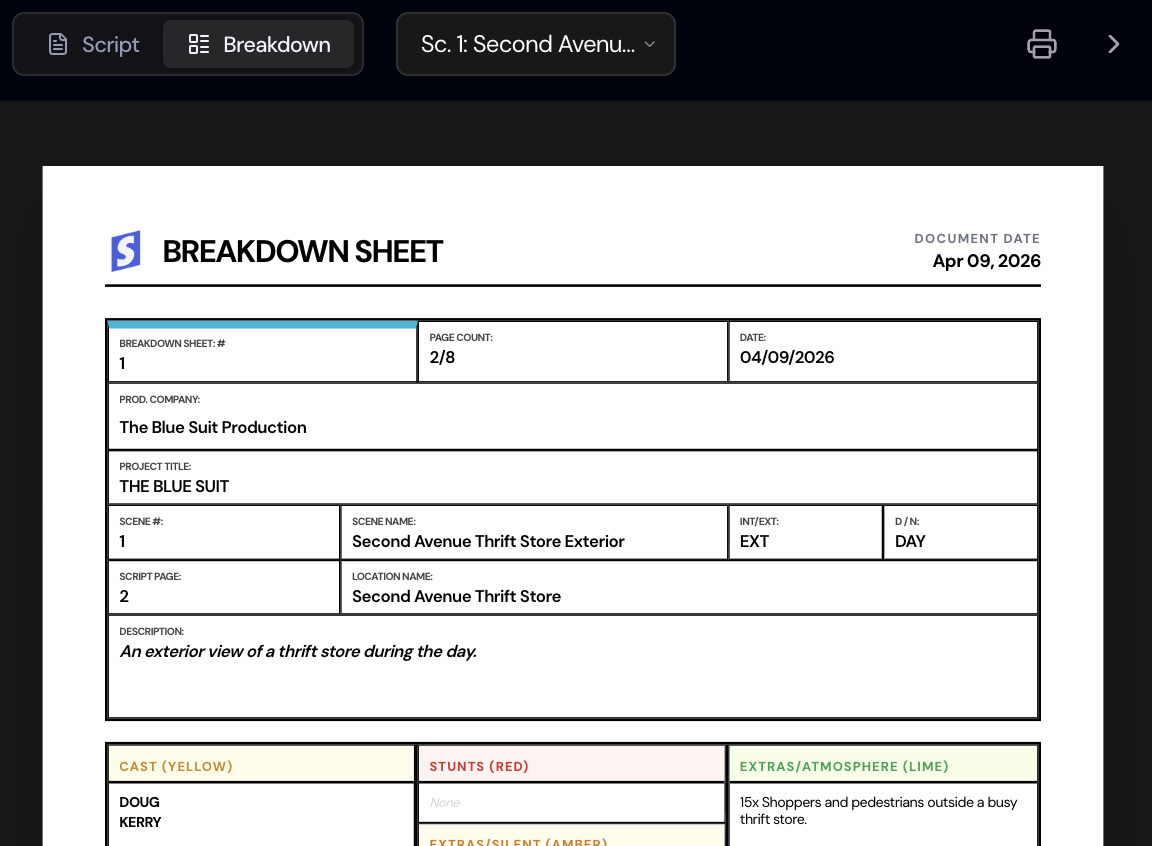
Break the script down into eighths before anyone talks about a start date. A scene that runs 1 3/8 pages in a dialogue-heavy kitchen is a different day from 1 3/8 pages of a foot chase through a parking garage, so count pages first and then mark the scenes that will shoot slower than their length suggests (stunts, kids, animals, vehicles, night exteriors, anything with a practical effect).
Here's a rough check. Say the script is 96 pages and your money covers 18 days.
| Plan | Pages | Days | Pages per day |
|---|---|---|---|
| Straight average | 96 | 18 | 5.33 |
| Pull out 2 action days at 2 pages each | 92 | 16 | 5.75 |
| Add a second-unit or pickup half day | 92 | 16.5 | 5.58 |
Once the heavy days are carved out, the rest of the schedule has to run nearly six pages a day. If your director likes generous coverage, cut scenes or find money for more days now, while it's a conversation instead of a crisis in week three. The shoot days estimator and the guide to how many script pages you can shoot in a day are good sanity checks, and the page count calculator settles arguments about eighths.
Board for locations first, then cast
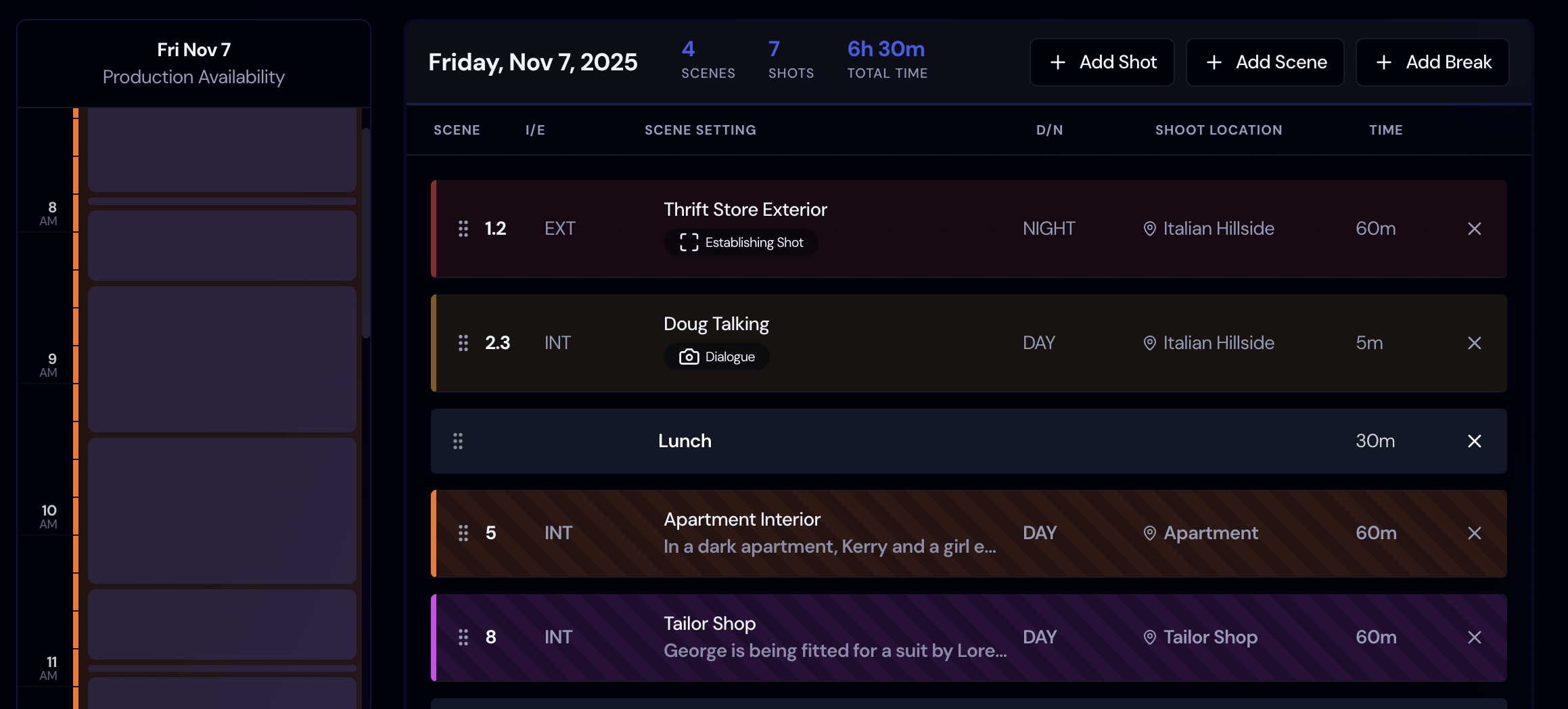
On an indie, locations usually force the schedule. You get the house for five days in week two, the diner only on Mondays, the church after Sunday services. Lock those windows, then arrange scenes inside them so each location is shot out in one visit. Every return trip to a location is another load-in, another location fee, and often another company move.
Then look at cast. Build the Day Out of Days as soon as a draft board exists. An actor who works day 2 and day 14 with nothing in between is either on hold for eleven days or doing a drop/pickup, and under union terms those choices cost different amounts. Sliding a single scene can turn an expensive SW...H...H...WF run into two short contracts. The stripboard template and block shooting vs cross-boarding cover the tradeoffs.
Watch turnaround when you schedule a night exterior followed by a day interior. A ten-hour turnaround for crew and a twelve-hour rest period for cast (check your agreements for the real numbers) can push Monday's call so late that you lose half the day. The turnaround calculator does the math.
Where the money goes
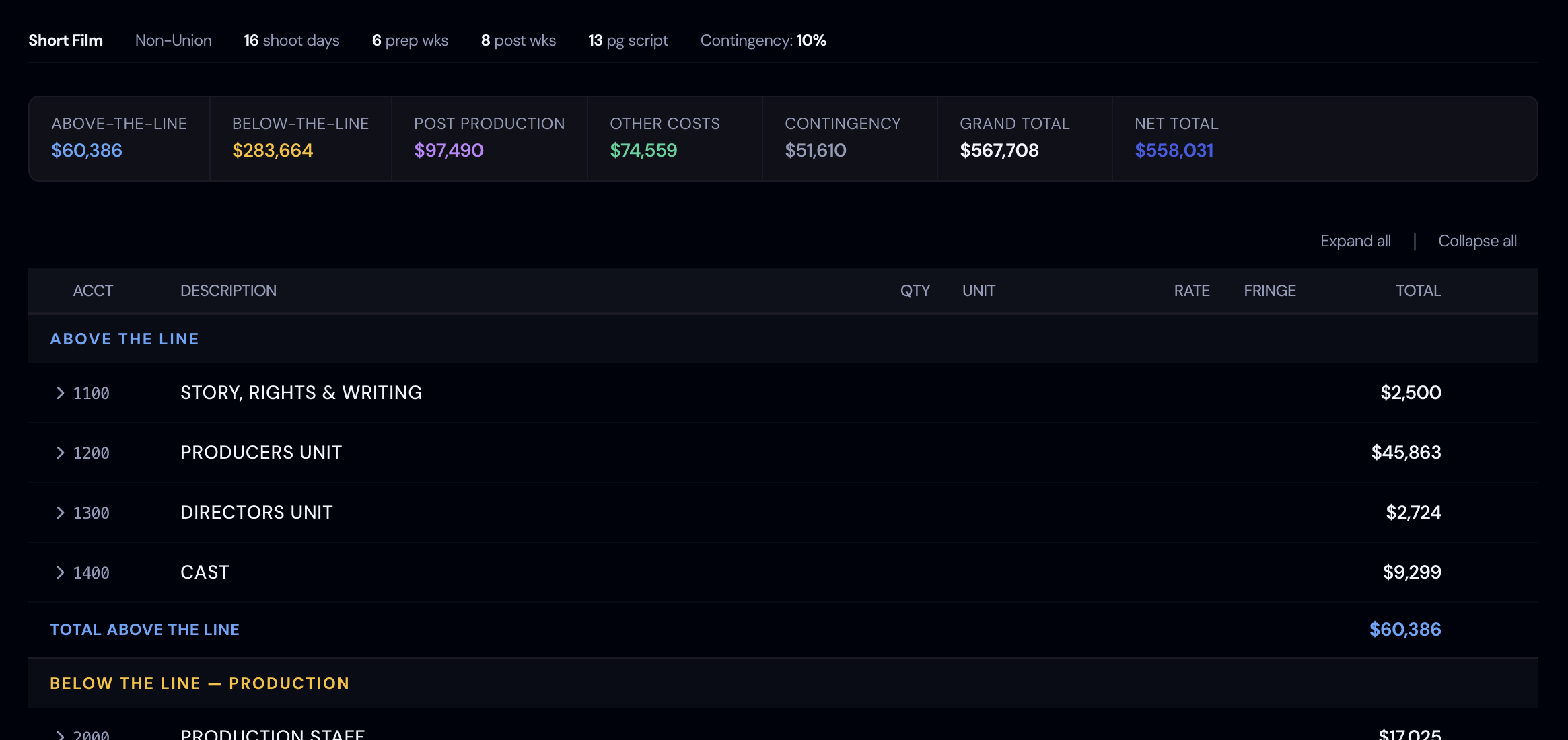
On a micro or low-budget feature the above-the-line section is often small because people are deferring fees, which makes below-the-line labor and equipment the biggest numbers on the top sheet. Common surprises:
- Fringes. Payroll taxes and union pension and health contributions sit on top of wages, and first-time producers forget them on cast. See film budget fringes.
- Kit and box rentals for department heads, which are cheap individually and add up across a crew of twenty.
- Picture vehicles, weapons, and stunt safety, all of which bring their own insurance riders.
- Contingency. Ten percent is a common starting point, and it gets spent. The indie film budget template and the line-by-line indie feature budget show where it usually goes.
Incentives can change the math, but most programs have a minimum spend, a resident labor rule, and an audit, and the money arrives after you've already paid the bills. Plan to cash-flow the whole shoot yourself and count the incentive as money that comes back later. How film tax credits work explains the timing.
Paperwork that decides whether you finish
Start the long-lead paperwork during development. If you're hiring SAG-AFTRA performers, the signatory process needs your script, budget, schedule, and financing details, and it takes time to clear. Read how to become a SAG-AFTRA signatory before you make offers. Production insurance has to be bound before you can hand locations and rental houses a certificate of insurance. Investors and distributors will ask for chain of title on the script.
During prep, keep crew deal memos, location release forms, and talent releases signed and filed by shoot day. A missing location agreement discovered in post is a reshoot or a legal problem, and E&O insurers will ask for it before distribution.
Mistakes that show up in week two
- Locking the schedule before the script is locked. Every revision after the board is set needs a fresh breakdown pass, or props and wardrobe lists fall behind.
- Scheduling the hardest scene on day one. Crews need a day or two to find their rhythm. Put a manageable, contained scene first.
- No cover set. One rainy exterior day with no interior to swap in costs a full day of payroll. Read cover sets and weather cover.
- Treating the call sheet as the schedule. The call sheet only shows tomorrow. Update the one-liner and send an advance schedule so departments see what's coming.
How Storiara fits a feature
Storiara imports the script as PDF, Word, or Final Draft, extracts scenes with page eighths and the main breakdown elements, and gives you a manual stripboard with a cast Day Out of Days built from it. The budget is calculated from the breakdown and the rates you enter, and call sheets go out by email or shareable link. You still make every scheduling decision yourself.